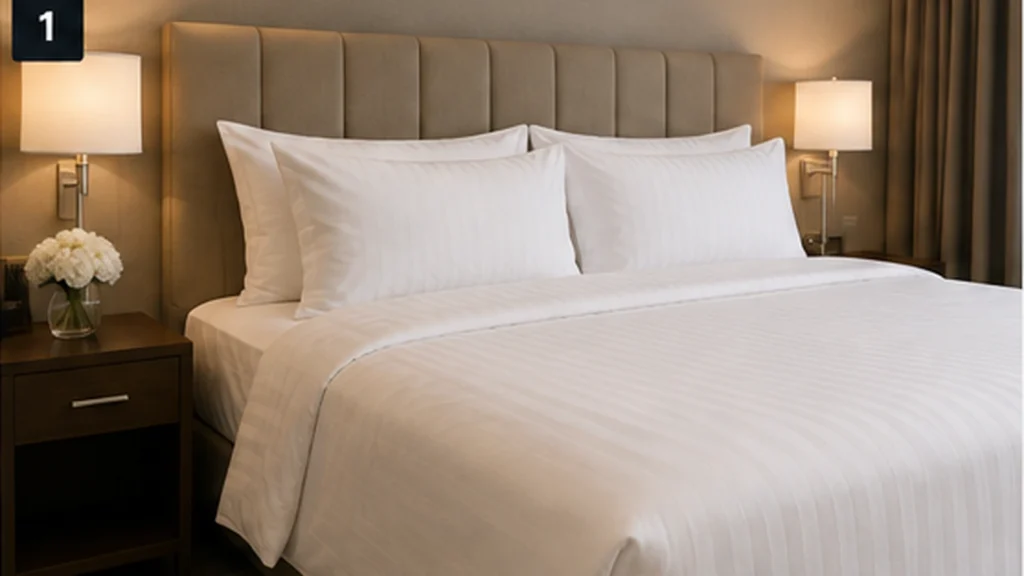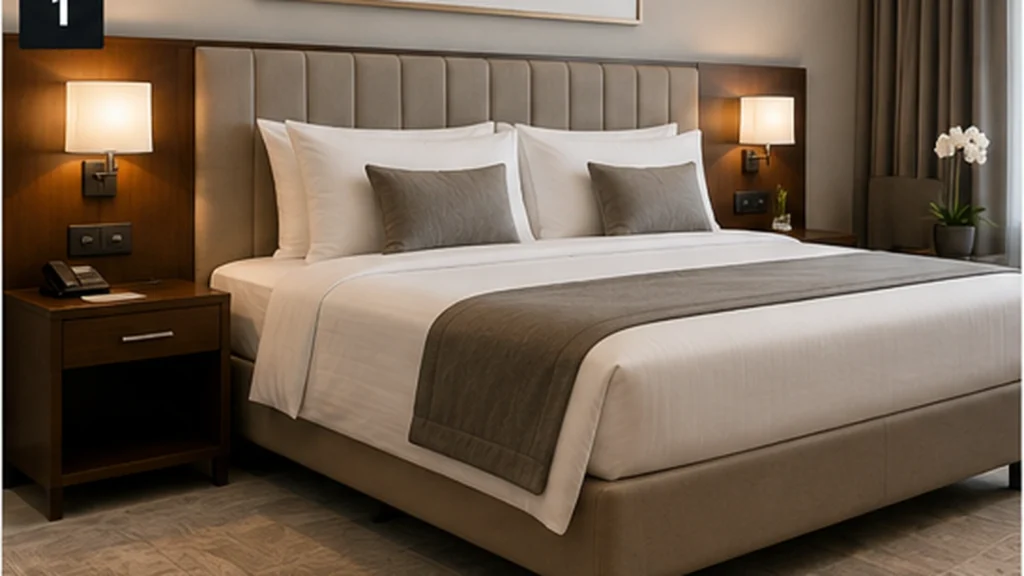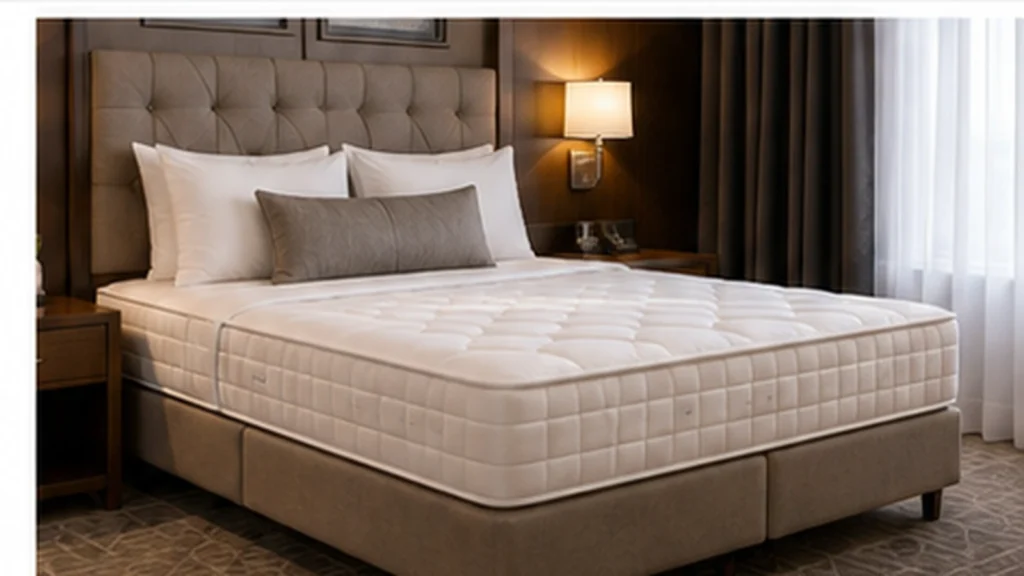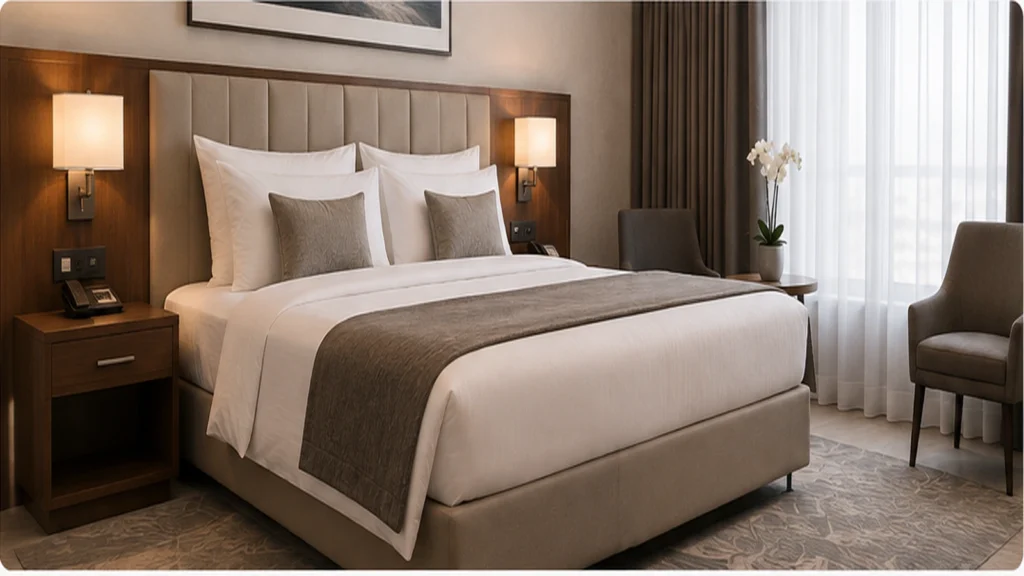
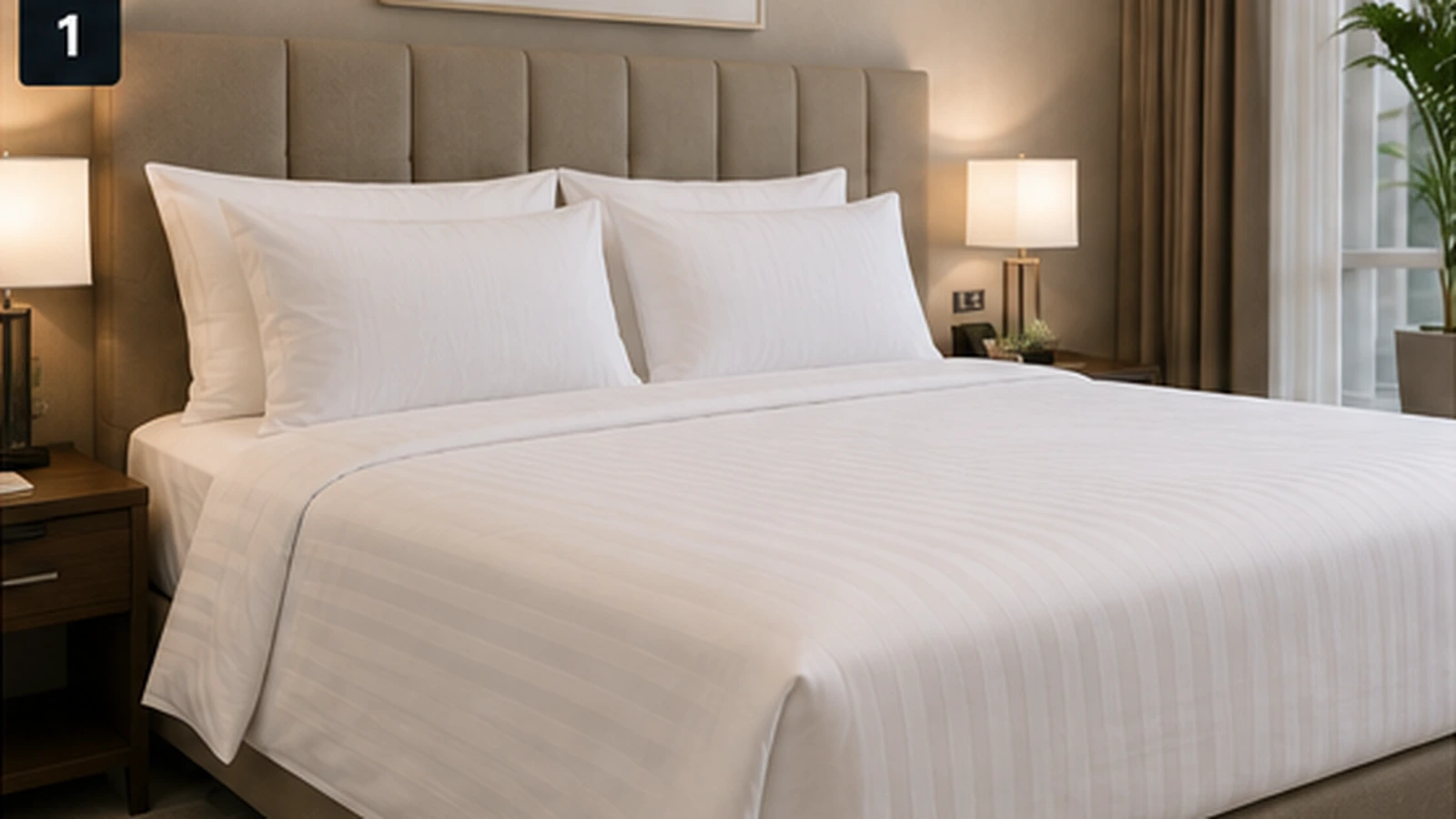
QUICK OVERVIEW
Key Takeaways
- Build one master textile schedule covering guestrooms, bathrooms, spa, banquet areas, quantities, dimensions and delivery phases.
- Specify exact product dimensions, materials, fabric construction and performance requirements before comparing supplier quotations.
- Calculate par stock from occupancy, linen-change frequency, laundry turnaround, reserve needs and replacement lead times.
- Approve representative samples after realistic commercial washing to verify shrinkage, feel, stitching, colour and performance.
- Confirm branding, labels, compliance documents, packing and delivery requirements before mass production.
- Plan repeat-order codes, replacement availability and lifecycle cost from the initial procurement stage.
For new hotels and renovation projects, the strongest procurement results come from defining the complete textile scope early, standardising dimensions and specifications, approving representative samples, confirming laundry performance and planning quantities around actual operational needs. This checklist helps owners, operators, procurement teams, designers and project managers structure that process before quotations and production begin.
Start with a Complete Hotel Textile Scope
Before requesting prices, define exactly which textile categories are included in the project. Missing items at the specification stage often create urgent supplementary orders close to opening.
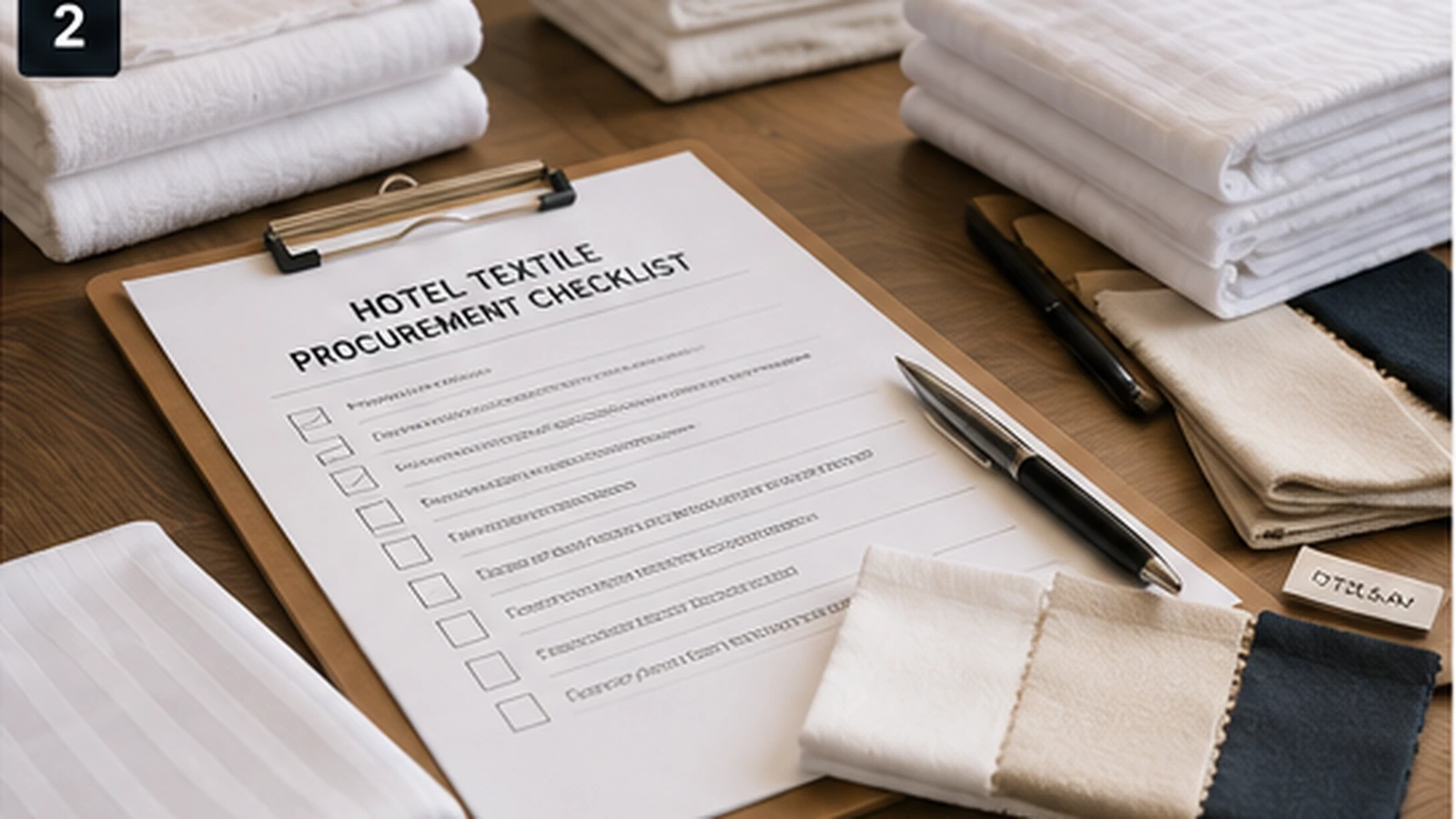
A typical hotel textile scope may include:
- Bed sheets
- Duvet covers
- Pillowcases
- Mattress protectors
- Pillow protectors
- Duvets
- Pillows
- Blankets or throws
- Bed runners or decorative textiles
- Bath towels
- Hand towels
- Face towels
- Bath mats
- Bathrobes
- Pool and spa towels
- Table linen
- Napkins
- Banquet tablecloths
- Chair covers where required
- Other project-specific textile products
The final list should reflect the actual hotel concept, not a generic template.
Build the Procurement Schedule from the Room Programme
Room count alone is not enough. Textile quantities depend on room type, bed configuration, bathroom layout and operational standards.
For each room category, record:
- Number of rooms
- Number of beds
- Bed size and mattress dimensions
- Pillow quantity per bed
- Duvet quantity and size
- Sheet and pillowcase requirements
- Towel set per occupied guest or room
- Bathrobe requirement
- Extra-bed or sofa-bed requirements
- Accessible-room variations
- Suite-specific or VIP textile requirements
This room-by-room approach reduces over-ordering, under-ordering and incorrect size assumptions.
Separate Guestroom, Bathroom, Spa and Banquet Textile Requirements
Different departments use textiles under different conditions. Guestroom bed linen is judged by sleep comfort and laundry performance, while bathroom towels require absorbency, softness and drying efficiency. Pool and spa textiles may need different weight, colour and chemical resistance. Banquet textiles prioritise appearance, stain management, dimensions and event turnover.
Create separate specification groups for:
- Guestroom bedding
- Bathroom linen
- Pool and spa textiles
- Food and beverage linen
- Banquet and event textiles
- Housekeeping reserve stock
- Special-purpose textile items
This makes technical comparison between suppliers clearer.
Confirm Exact Bed and Mattress Dimensions Before Linen Production
Generic labels such as single, double, queen and king are not sufficiently precise for international hotel projects. Actual dimensions can vary by country, brand and manufacturer.
Before producing fitted sheets, protectors, duvet covers or other bed textiles, confirm:
- Mattress width
- Mattress length
- Mattress height
- Topper height where applicable
- Protector thickness
- Finished bed height
- Duvet dimensions
- Pillow dimensions
- Twin-to-double configurations
The textile schedule should use numerical dimensions in centimetres or millimetres.
Define Fabric Specifications Clearly
Descriptions such as “premium cotton” or “high-quality hotel linen” are not technical specifications. To compare quotations correctly, define the characteristics that matter.
Depending on the product, the specification may include:
- Fibre composition
- Yarn specification
- Weave type
- Thread count where relevant
- Fabric weight
- Towel GSM
- Colour or whiteness standard
- Finishing treatment
- Shrinkage tolerance
- Stitching and seam requirements
- Closure type
- Labelling
- Care instructions
A precise specification reduces the risk of suppliers pricing technically different products under similar commercial descriptions.
Do Not Use Thread Count as the Main Quality Metric
Thread count can be useful as one part of a bed-linen specification, but it should never replace an assessment of yarn quality, weave, fabric weight, finishing and commercial laundry performance.
For hotel sheets and duvet covers, evaluate:
- Hand feel
- Breathability
- Dimensional stability
- Resistance to repeated washing
- Ironing performance
- Drying time
- Surface appearance after laundering
- Seam durability
The best fabric is the one that delivers the required guest experience and operational performance for the hotel.
Specify Towels by More Than Weight
Towel GSM is important, but weight alone does not determine quality. Fibre quality, yarn structure, pile construction, absorbency, drying behaviour and edge finishing also matter.
When comparing hotel towels, review:
- Dimensions
- Weight or GSM
- Fibre composition
- Absorbency
- Loop construction
- Border design
- Stitching
- Shrinkage
- Drying time
- Appearance after repeated washing
Very heavy towels can feel luxurious but may increase drying time and laundry energy use. The specification should balance comfort with operational efficiency.
Define Pillow and Duvet Performance Requirements
Pillows and duvets influence guest comfort and should be specified with the same care as bed linen.
For pillows, consider:
- Finished dimensions
- Fill type
- Fill weight
- Firmness or loft
- Outer fabric
- Washability or cleaning method
- Protector compatibility
For duvets, consider:
- Dimensions
- Fill type
- Fill weight
- Warmth level
- Climate and room temperature
- Outer fabric
- Quilting construction
- Care method
Properties may also use multiple pillow types to provide different comfort options.
Plan Mattress and Pillow Protection
Protectors are relatively low-cost components compared with mattresses and pillows, but they can have a significant effect on hygiene and replacement life.
Review:
- Water resistance where required
- Breathability
- Noise during use
- Elastic or fitted construction
- Mattress depth compatibility
- Wash temperature
- Drying method
- Shrinkage
- Replacement frequency
A protector should preserve the underlying product without significantly changing guest comfort.
Calculate Par Stock from the Actual Laundry Operation
Par stock is the number of sets required to keep the hotel operating while some items are in guestrooms, some are in laundry and others are held as clean reserve or replacement stock.
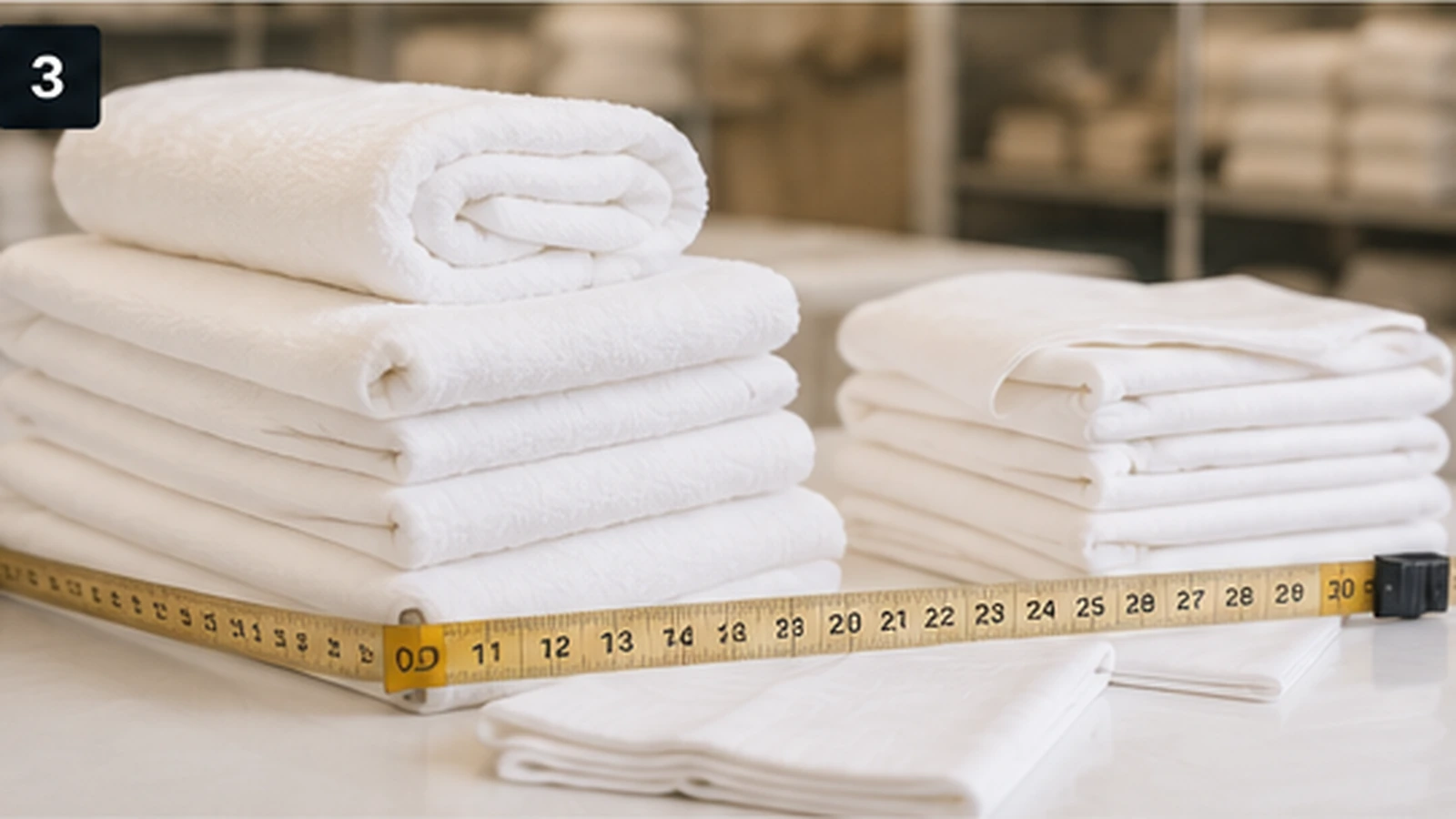
The correct par level depends on:
- Occupancy
- Linen-change frequency
- Laundry turnaround time
- In-house or outsourced laundry
- Transport time to external laundry
- Seasonality
- Emergency reserve requirements
- Replacement lead time
A property with same-day in-house laundry may require a different stock strategy from a resort using an external laundry with multi-day turnaround.
Include Opening Stock, Operating Stock and Replacement Stock
Project quantities should distinguish between:
Opening Stock
The quantity required to dress rooms and prepare departments for opening.
Operating Stock
The additional quantity required to maintain daily rotation through laundry and housekeeping.
Replacement and Reserve Stock
Extra stock for damage, stains, loss, peak occupancy, delayed laundry or future replacement.
Separating these categories makes the commercial quotation easier to understand and helps hotel management plan future budgets.
Match Textile Specifications to the Laundry Process
Commercial laundry conditions can significantly affect textile life. Before final approval, confirm how the hotel or laundry contractor will process each item.
Important information includes:
- Wash temperature
- Detergent and chemical system
- Use of bleach where applicable
- Drying temperature
- Tumble drying or line drying
- Calendering or ironing
- Pressing requirements
- Sorting procedures
- Expected cycles per week
The textile specification should be compatible with these operating conditions.
Approve Samples After Representative Washing
New textile samples can look and feel different after commercial washing. For significant projects, evaluate both unused and washed samples.
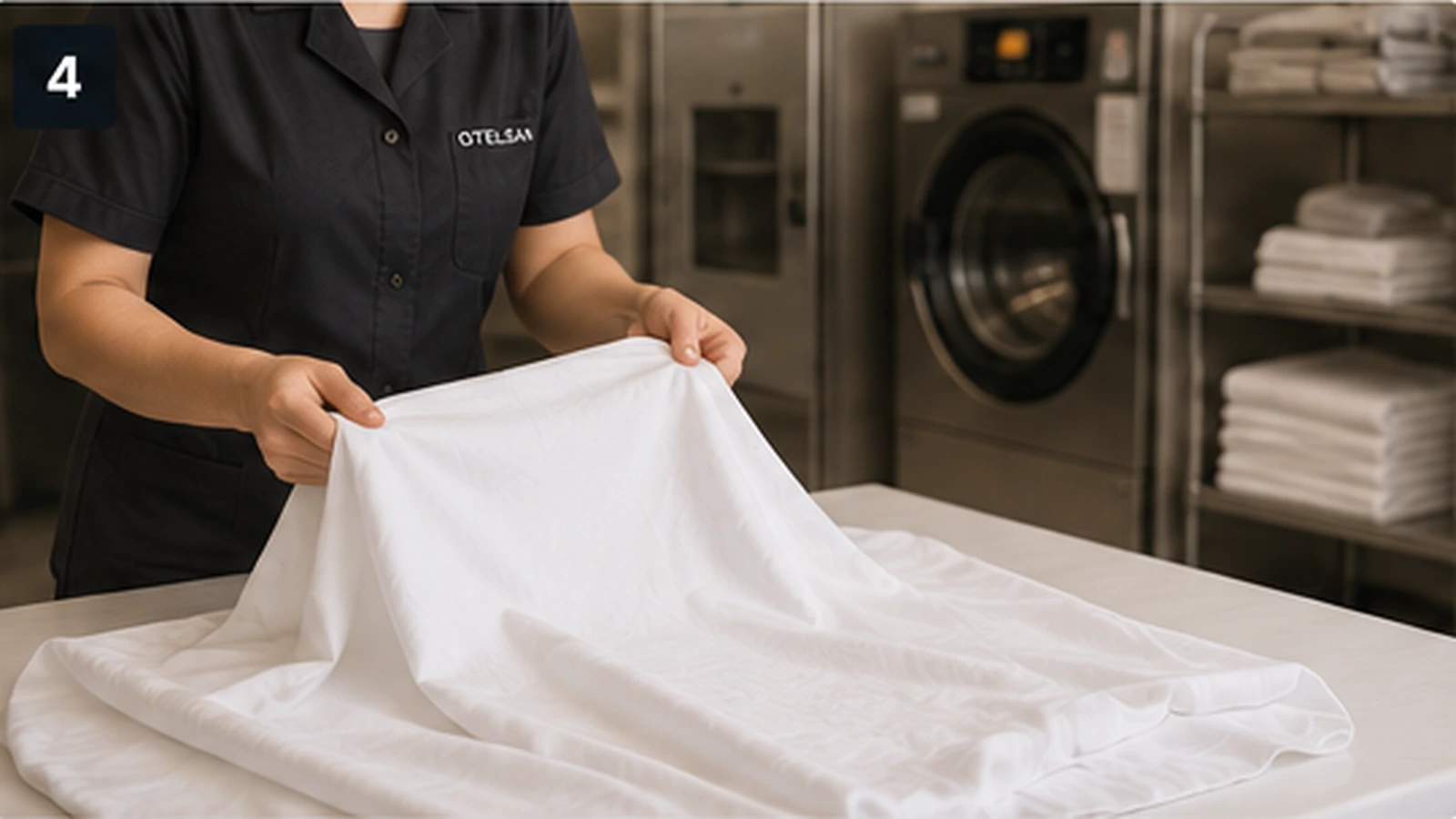
Review after representative laundry cycles:
- Dimensions
- Shrinkage
- Surface feel
- Colour or whiteness
- Seam stability
- Pilling
- Towel absorbency
- Ironing result
- Closure performance
- Overall appearance
Sample approval should be documented before mass production.
Standardise Sizes Where Operationally Practical
Excessive variation increases inventory complexity. Where the hotel design allows, standardising textile dimensions across several room types can simplify housekeeping, laundry sorting and replacement ordering.
However, standardisation should not create poor fit. The mattress, duvet and pillow dimensions must remain the starting point.
Use Clear Labelling and Product Codes
Hotels with multiple room types or several properties benefit from permanent internal product identification.
Labels can include:
- Hotel or property code
- Product type
- Size
- Room category
- Care instructions
- Batch or production information
A practical coding system supports inventory control, laundry sorting and future reordering.
Plan Embroidery, Logos and Custom Branding Early
Custom embroidery or woven branding can add identity to towels, bathrobes, pillows or other textile products, but branding should be approved before production.
Confirm:
- Logo artwork in vector format
- Finished logo dimensions
- Thread colours
- Placement
- Embroidery density
- Effect on fabric performance
- Sample approval
Large or dense embroidery can change the feel and drying behaviour of some products, so physical approval is recommended.
Confirm Colour Standards and Batch Consistency
White is common for hotel bed and bath linen because it supports a clean visual standard and simplifies replacement matching. Coloured textiles require tighter control of shade and batch consistency.
For coloured products:
- Approve a physical colour standard
- Confirm colourfastness requirements
- Consider laundry chemistry
- Plan replacement matching
- Review production batch tolerances
Digital screen colours should not be treated as final production approval.
Review Stitching and Construction Quality
Textile life is affected by stitching as well as fabric. Inspect:
- Stitch density
- Seam straightness
- Hem width
- Reinforcement at stress points
- Corner construction
- Closure quality
- Loose threads
- Label attachment
For towels and bathrobes, also inspect borders, loops, belts, pockets and hanging loops where applicable.
Confirm Required Compliance and Documentation
International hospitality projects may require material, chemical, fire-performance, labelling or other compliance documentation depending on destination, operator and product type.
Before production, confirm:
- Destination country
- Hotel brand or consultant requirements
- Applicable tests or standards
- Required certificates or declarations
- Restricted substances requirements
- Labelling language
- Document format
Do not leave documentation requirements until goods are ready to ship.
Plan Packing for Project Installation
Project packing should support efficient site distribution, not only transport protection.
Consider:
- Room-by-room packing
- Floor-by-floor packing
- Department-based packing
- Carton labels
- Product codes
- Quantities per carton
- Protection from moisture and contamination
- Pallet configuration
Clear packing can reduce sorting work during a hotel opening or renovation.
Coordinate Delivery with the Hotel Opening Programme
Textiles are often needed late in the project but before rooms can be handed over to operations. Delivery planning should consider construction progress, storage conditions, laundry preparation and housekeeping mobilisation.
Confirm:
- Production lead time
- Sample approval deadline
- Final quantity freeze date
- Shipment date
- Customs documentation where applicable
- Site storage availability
- Pre-opening laundry requirements
- Floor handover sequence
For phased renovations, separate deliveries may be more practical than one complete shipment.
Plan the Future Replacement Programme
Hotel textiles are consumable operational assets. Even a strong initial specification will eventually require replenishment.
Before placing the first order, ask:
- Can the same specification be supplied later?
- Will fabric and colour references be retained?
- What are typical repeat-order lead times?
- What is the minimum quantity for replacement orders?
- Can additional hotel logos be reproduced consistently?
- Are product codes documented clearly?
This helps the hotel maintain consistency after opening.
Compare Quotations on Equivalent Specifications
Two quotations can appear similar while covering very different quality levels and commercial scopes.
Compare line by line:
- Product dimensions
- Material composition
- Fabric construction
- Weight or GSM
- Thread count where applicable
- Stitching and finishing
- Branding or embroidery
- Packaging
- Sample approval
- Compliance documentation
- Delivery terms
- Replacement support
The lowest unit price is not necessarily the lowest operational cost if the textile has a shorter service life or creates higher laundry expense.
Create a Final Hotel Textile Procurement Checklist
Project Information
- Hotel name and location
- Property type and positioning
- Room count and room mix
- Target opening or renovation date
- Hotel brand or operator requirements
Guestroom Bedding
- Mattress dimensions
- Sheet sizes
- Duvet and duvet-cover sizes
- Pillow and pillowcase sizes
- Protectors
- Blankets or decorative textiles
Bathroom and Spa
- Towel types and dimensions
- Towel GSM
- Bath mats
- Bathrobes
- Pool or spa towels
Fabric and Construction
- Fibre composition
- Weave
- Fabric weight
- Thread count where applicable
- Colour or whiteness
- Stitching
- Shrinkage tolerance
Operational Planning
- Laundry process
- Par stock
- Opening stock
- Reserve stock
- Labelling
- Product codes
- Replacement plan
Project Approval
- Unwashed samples
- Washed samples
- Colour approval
- Logo approval
- Required certificates
- Packing plan
- Delivery schedule
Frequently Asked Questions
When should hotel textile procurement begin?
Textile planning should begin once the room programme, bed dimensions, bathroom standards and operating concept are sufficiently defined. Sample approval, production and laundry testing require time, so waiting until the final weeks before opening increases risk.
How should a hotel calculate linen quantities?
Start with the exact room and department requirement, then add operating par stock according to occupancy, linen-change frequency, laundry turnaround, reserve needs and replacement lead time.
Should hotel linen samples be washed before approval?
For significant projects, yes. Representative washing helps verify shrinkage, hand feel, stitching, colour, absorbency and finishing performance.
Is higher GSM always better for hotel towels?
No. Heavier towels can feel more substantial but may take longer to wash and dry. Fibre quality, absorbency, construction and operational efficiency should be considered together.
Is higher thread count always better for hotel sheets?
No. Thread count should be evaluated together with fibre quality, weave, fabric weight, finishing and commercial laundry performance.
What information should be sent with a hotel textile quotation request?
Provide the property location, room schedule, item list, exact dimensions, material requirements, quantities, par levels, branding requirements, laundry conditions, target delivery date and any required project standards or documentation.
Build the Textile Programme Around Hotel Operations
A successful hotel textile procurement programme combines guest comfort, housekeeping efficiency, laundry performance, consistent room presentation and a practical replacement strategy.
The strongest projects define exact dimensions, technical specifications, par levels, sample approvals and documentation before mass production begins. This creates clearer quotations, reduces last-minute changes and supports more consistent operation after opening.
For further technical guidance, review our hotel bed selection guide, hotel mattress buying guide, hotel bed base guide and hotel bed linen guide.
Explore OTELSAN hotel textiles, hotel beds, mattresses and banquet textile solutions, review the online catalogue or prepare a project quotation request for your new hotel, renovation or replacement programme.
For project-specific support, share your room schedule, textile list, quantities, dimensions, laundry requirements, target delivery date and destination with the OTELSAN export team.