QUICK OVERVIEW
Key Takeaways
- Specify the bed base together with the mattress and finished sleeping height as one coordinated hotel bed system.
- Evaluate frame construction, support surface and structural rigidity rather than choosing a base only by appearance.
- Plan twin-to-double rooms, joining systems, leg positions and headboard alignment before production.
- Select upholstery, legs, glides or castors according to durability, cleaning and housekeeping requirements.
- Use physical sample approval to verify dimensions, stability, noise, finish and mattress compatibility.
- Compare lifecycle value, replacement parts, logistics and future supply support alongside the initial unit price.
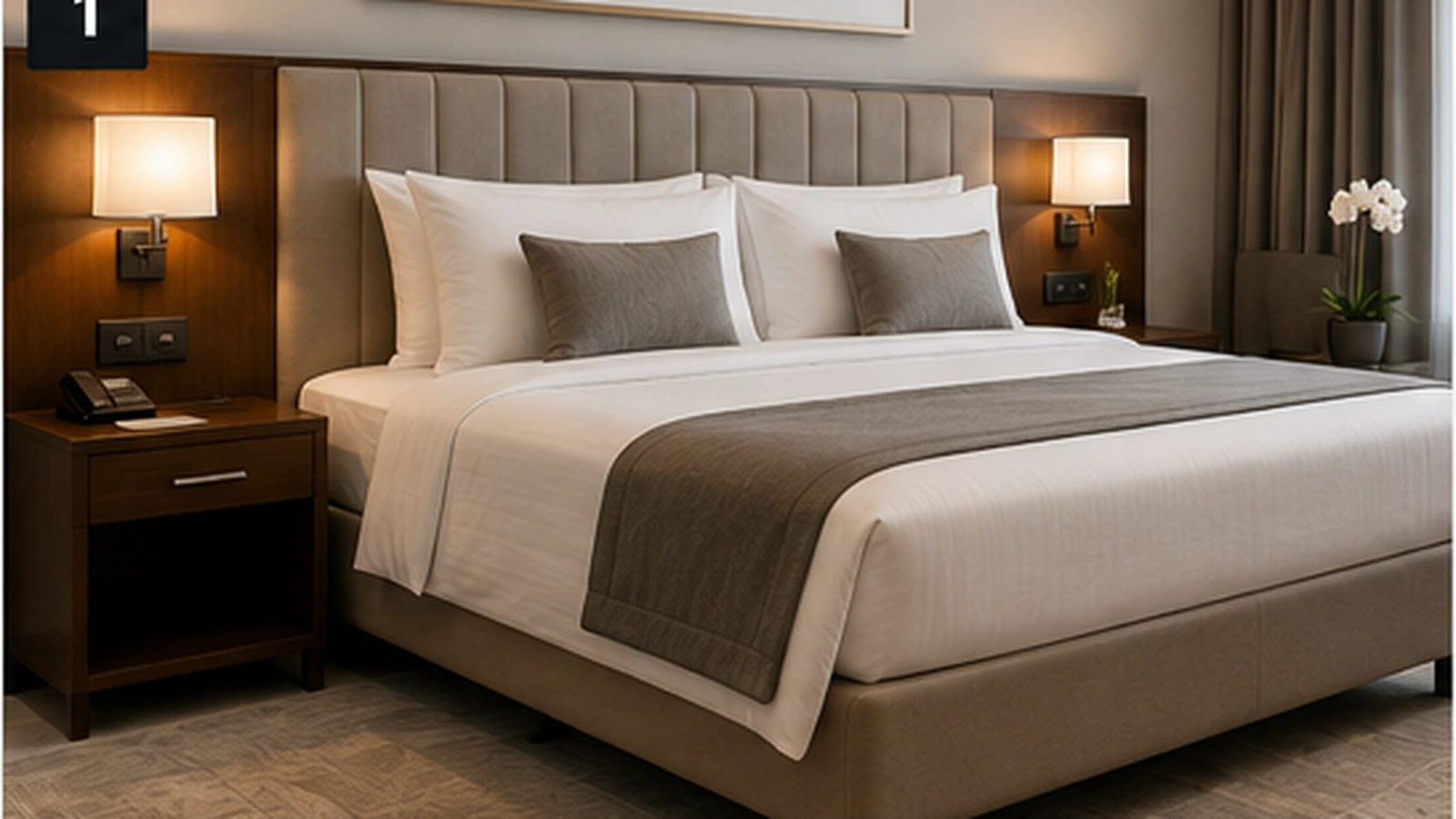
The correct solution depends on the property type, mattress construction, room programme, housekeeping procedures, interior design, expected usage and project logistics. A well-designed hotel bed base should remain stable under repeated commercial use while allowing the mattress, headboard, linen and surrounding furniture to work together as one coordinated system.
Define the Bed Base According to the Hotel Room Programme
Before selecting a bed base model, define how each room will operate. Different room types may require different base dimensions, heights, upholstery finishes, joining systems or mobility features.
Important questions include:
- How many guestrooms and suites are included?
- Which rooms require single, twin, double or king configurations?
- Will twin beds need to convert into a double arrangement?
- What mattress dimensions and heights are planned?
- What finished sleeping height is required?
- Will the headboard be wall-mounted or integrated with the bed system?
- Does housekeeping need to move the bed regularly?
- Are castors, glides or fixed legs preferred?
- Are there accessibility requirements affecting height or clearance?
- What upholstery, colour or finish must coordinate with the interior design?
- What site-access and installation constraints apply?
Creating a room-by-room bed schedule before quotation helps prevent dimensional conflicts and allows quantities to be matched to actual room configurations.
Understand the Main Types of Hotel Bed Bases
Hotel bed bases can be produced in different structural and visual formats. The best choice depends on how the room is designed and how the bed will be used and maintained.
Upholstered Hotel Bed Bases
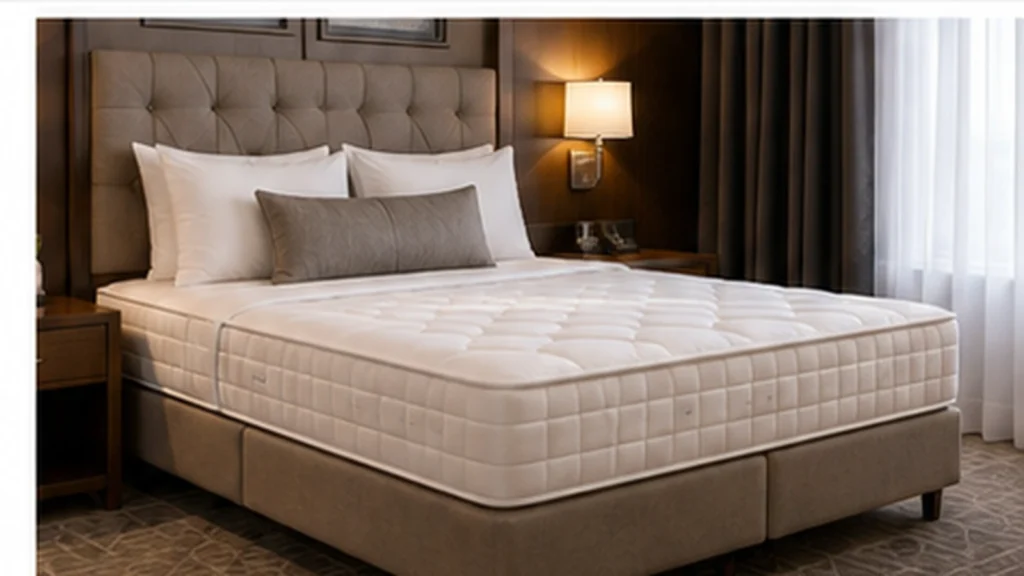
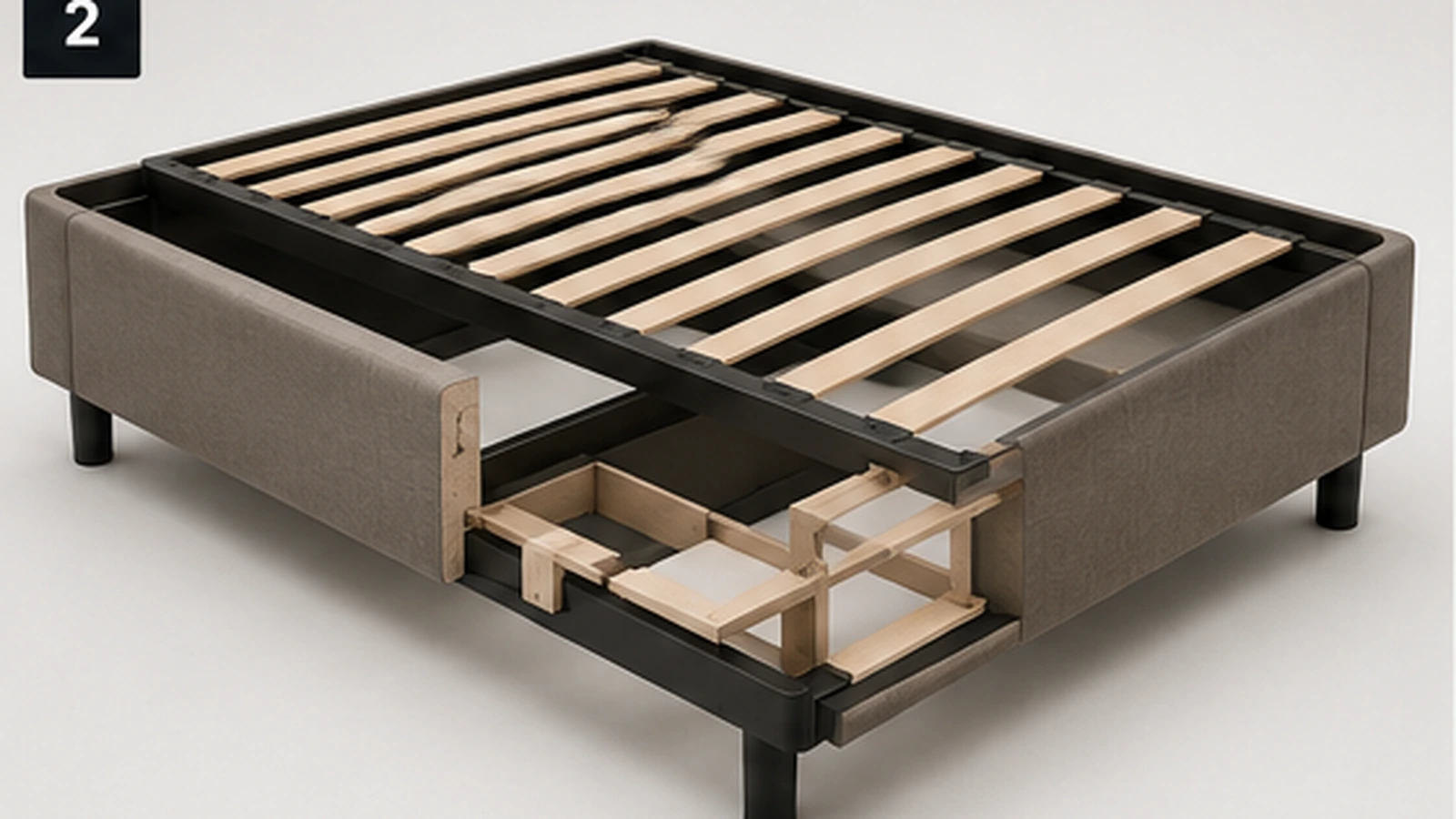
Upholstered bases are widely used in hotels because they provide a finished, integrated appearance and can be coordinated with the room’s fabric palette. They are particularly suitable where the bed base remains visible below the mattress.
When specifying an upholstered base, review:
- Internal frame construction
- Support surface beneath the mattress
- Upholstery fabric durability
- Cleanability and stain resistance
- Corner and edge finishing
- Seam quality
- Fabric tension and alignment
- Replacement availability
- Leg, glide or castor system
A good upholstered base should maintain its shape and appearance after repeated cleaning, moving and bed-making cycles.
Platform and Structured Bases
Platform-style bases can create a more architectural and contemporary appearance. They are often used where the interior concept requires clean horizontal lines, recessed feet or a visually lower profile.
The support surface must remain level and sufficiently rigid to support the mattress evenly. Decorative structure should never compromise stability or create unnecessary housekeeping difficulty.
Split and Modular Bases
Large beds may be easier to transport, install and service when produced as split or modular base units. This can be valuable for projects with restricted lifts, narrow corridors or phased room installation.
Where split bases are used, the connection method should keep the complete bed stable and visually aligned after installation.
Evaluate Frame Construction and Structural Rigidity
The internal frame is the foundation of the bed base. Its quality affects movement, noise, long-term alignment and mattress support.
A contract-grade bed base should be evaluated for:
- Frame material and section dimensions
- Joint design
- Corner reinforcement
- Cross-member configuration
- Fastener quality
- Resistance to twisting
- Support-surface rigidity
- Leg attachment points
The objective is not simply to create a heavy base. Efficient structural design should provide stability without adding unnecessary weight that makes housekeeping or installation more difficult.
Choose the Mattress Support Surface Carefully
The surface supporting the mattress influences how the mattress performs. Different mattress constructions may require different levels of rigidity, ventilation or load distribution.
The support surface should:
- Remain flat under repeated use
- Distribute load evenly
- Prevent localised mattress deformation
- Avoid sharp contact points
- Work with the intended mattress construction
- Allow appropriate ventilation where required
The mattress manufacturer’s recommended support conditions should be considered during project specification.
Coordinate Base Height with Mattress Height
Bed-base height should never be determined independently from mattress height. The guest experiences the finished sleeping height, not the individual component dimensions.
Before approval, calculate:
- Base height
- Leg or castor height
- Mattress height
- Topper height where applicable
- Protector and bedding build-up where relevant
- Total finished sleeping height
This dimension should then be checked against headboard proportions, bedside tables, accessible-room requirements and housekeeping practices.
An unnecessarily high bed may be difficult to service. A bed that is too low can affect guest comfort and visual balance.
Plan Twin-to-Double Configurations as a Complete System
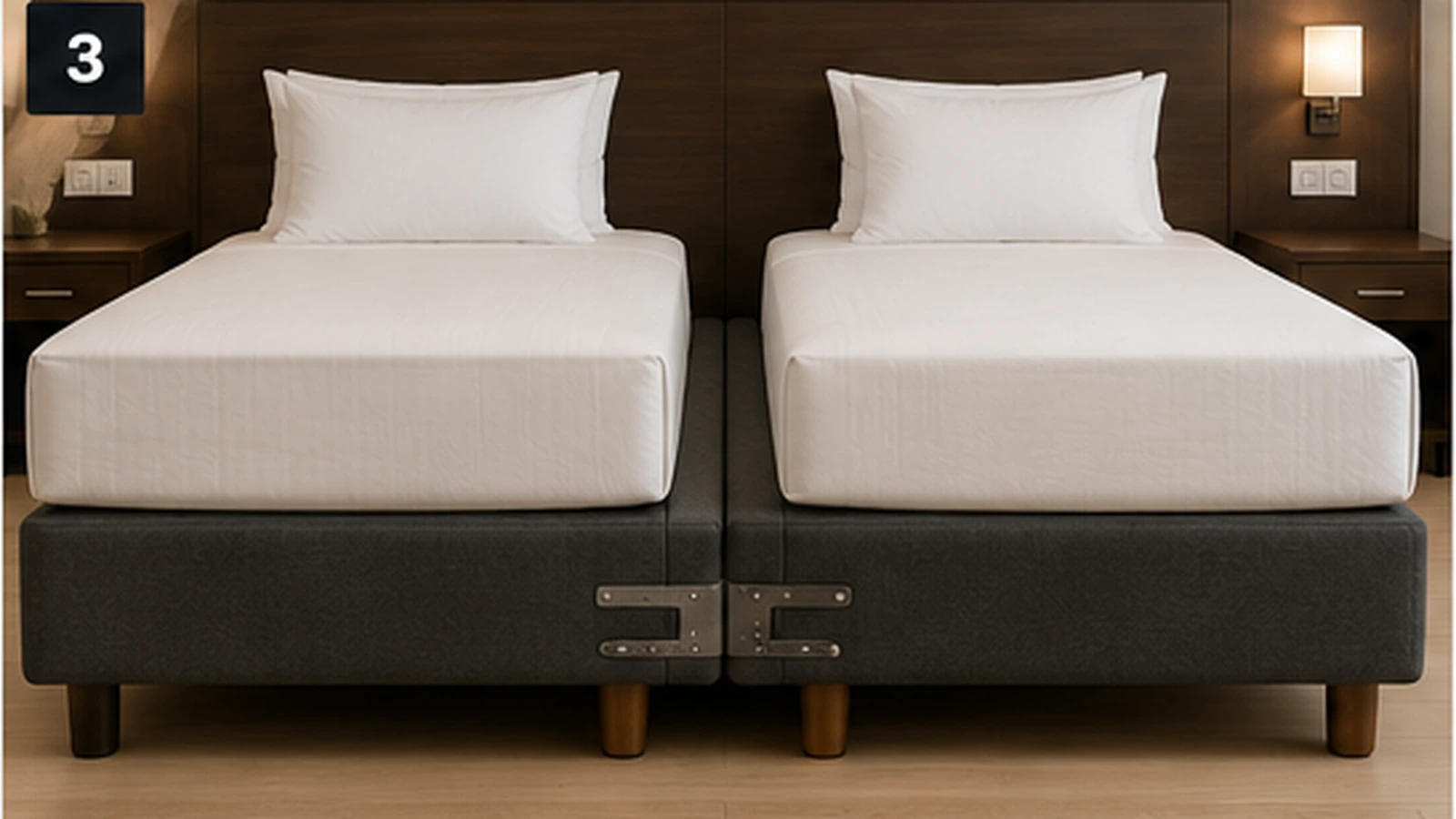
Flexible twin-to-double rooms are common in hospitality because they allow the same room to be sold in different configurations. The bed bases must therefore align accurately when separated and when joined.
Review:
- Base width and length
- Overall base height
- Leg positions
- Joining system
- Mattress dimensions
- Mattress edge construction
- Headboard width
- Bedside furniture clearances
- Topper strategy where applicable
The connection should be secure but practical for housekeeping teams to operate without specialist tools.
Select Legs, Glides and Castors for Hospitality Use
Small hardware components can have a large operational impact when multiplied across hundreds of rooms.
Fixed Legs
Fixed legs can provide a clean appearance and stable support. Their attachment points should be reinforced, and replacement parts should remain available.
Glides
Glides can reduce visible hardware and work well where the bed is not moved frequently. The glide material should be compatible with the flooring surface.
Castors
Castors can make cleaning and maintenance easier, but they must be appropriately specified for the floor type, bed weight and operational load. Where brakes are required, they should be easy for staff to operate and should hold the bed securely in position.
For all options, confirm load capacity, fixing method, floor protection and replacement availability.
Specify Upholstery for Durability and Cleaning
In upholstered hotel bed bases, fabric selection affects both aesthetics and maintenance. The material should be suitable for repeated commercial use and should coordinate with the room concept.
Consider:
- Abrasion resistance
- Cleanability
- Stain performance
- Colour stability
- Texture
- Seam performance
- Fire or material requirements where applicable
- Availability for future replacements
For large projects, approve the actual production fabric rather than relying only on a digital colour reference.
Review Edge, Corner and Upholstery Finishing
Visible quality is influenced by small details. Misaligned seams, loose fabric, inconsistent corner radii or exposed fasteners can reduce the perceived quality of the entire guestroom.
Inspect samples for:
- Corner symmetry
- Seam alignment
- Fabric tension
- Staple or fastener concealment
- Edge consistency
- Base-to-base visual consistency
For multi-room projects, consistency between units is as important as the quality of one individual sample.
Design for Housekeeping Efficiency
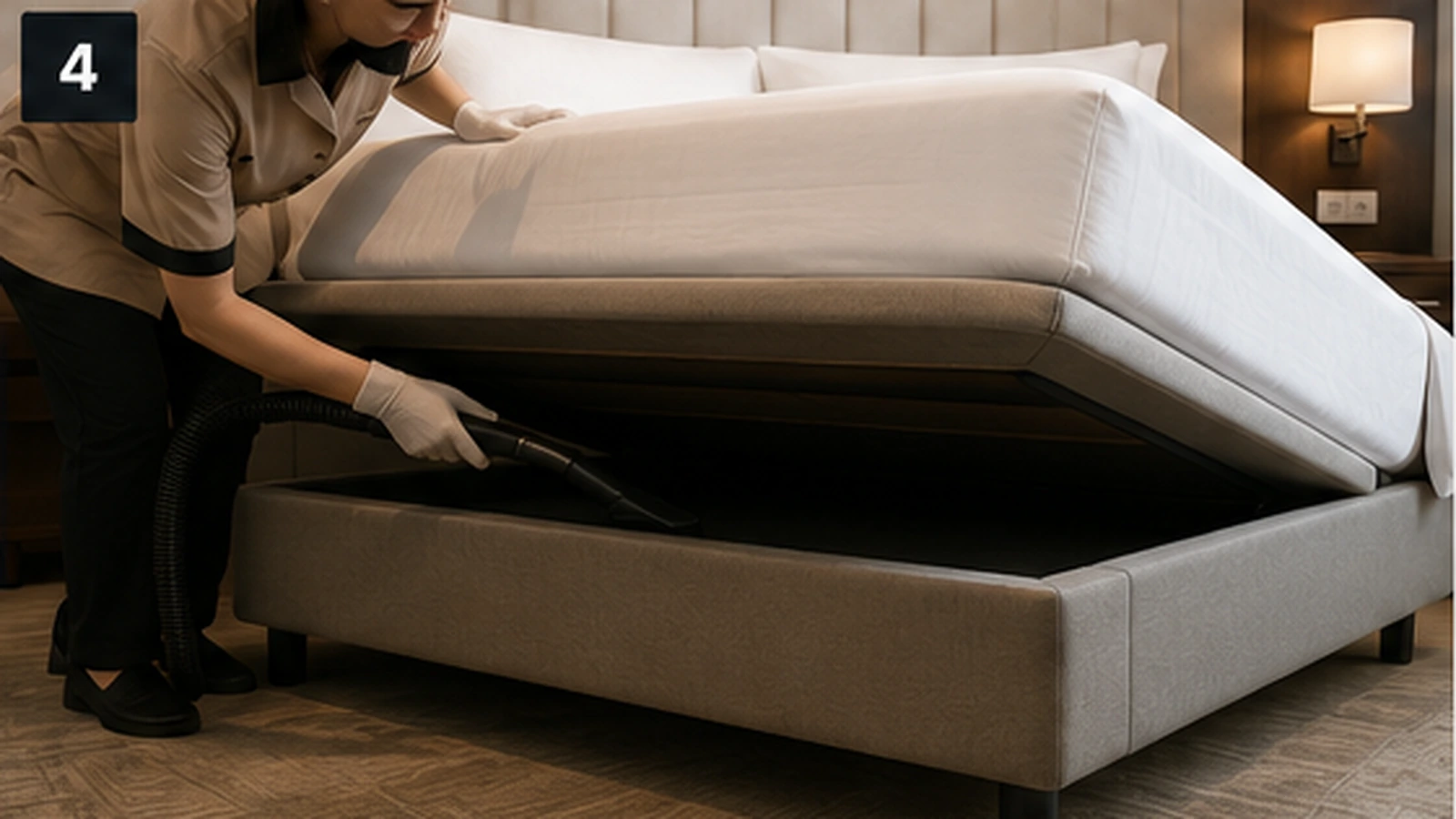
Housekeeping teams interact with the bed every day. The base should therefore support efficient linen changes, cleaning and inspection.
Operational considerations include:
- Ease of moving the bed when required
- Safe hand positions for pulling or repositioning
- Floor access around and beneath the bed
- Resistance to accidental movement
- Weight distribution
- Clearance for cleaning equipment
- Absence of sharp exposed edges
A base that is unnecessarily difficult to move or service can create repeated labour inefficiency across the hotel.
Consider Noise and Movement Stability
Hotel beds should remain quiet and stable under normal guest movement. Noise can originate from frame joints, loose fasteners, castors, headboard interfaces or interaction between the mattress and base.
Sample evaluation should include:
- Side-to-side movement
- Movement at corners
- Noise during sitting and turning
- Stability of legs or castors
- Connection between twin bases
- Interaction with the headboard
Any movement or noise observed during sample testing should be corrected before production.
Coordinate the Bed Base with the Headboard
Wall-mounted and bed-mounted headboards create different requirements. Where the headboard is fixed to the wall, the base must align accurately with the room layout and mattress position.
Where the headboard connects to the bed structure, review:
- Fixing points
- Bracket strength
- Height adjustment
- Alignment tolerance
- Access for installation
- Future removal and replacement
Headboard, mattress and base dimensions should be approved together to avoid visible gaps or misalignment.
Confirm Fire, Safety and Destination Requirements
Hotel projects may specify requirements relating to upholstery materials, fire performance, product safety or documentation. These conditions vary by destination, operator and project.
Before production, confirm:
- Destination country
- Applicable hotel or consultant standard
- Required test methods
- Materials or components covered
- Required certificates or reports
- Labelling requirements
Do not assume that documentation used for one market automatically satisfies another project.
Use Sample Approval for Significant Projects
A physical sample allows the project team to evaluate dimensions, appearance, rigidity, upholstery, mattress compatibility and housekeeping practicality together.
During sample review, verify:
- Overall dimensions
- Base height
- Finished bed height
- Structural stability
- Noise
- Upholstery finish
- Leg, glide or castor operation
- Mattress support
- Twin-to-double performance
- Headboard alignment
Document the approved sample, material codes and any revisions before mass production.
Plan Packing, Delivery and Installation
Bed bases are relatively large products, so logistics should be considered early in the project.
Confirm:
- Packed dimensions
- Whether legs or castors are supplied assembled
- Protection of upholstered surfaces
- Truck or container loading plan
- Site unloading procedure
- Lift dimensions
- Corridor widths
- Room distribution sequence
- Floor and room labelling
- Installation responsibility
Split or modular construction may be valuable where site access is restricted.
Plan Maintenance, Replacement and Future Expansion
A contract bed base should be considered over the lifecycle of the hotel. Components that can be replaced individually may reduce future disruption.
Ask whether:
- Legs or castors can be replaced
- Joining components are available separately
- Upholstery can be renewed
- Matching bases can be supplied later
- Equivalent fabrics can be sourced for future rooms
- Spare parts are available
This is particularly important for large hotels, phased developments and properties planning future room additions.
Compare Total Project Value, Not Only Base Price
The lowest unit price does not necessarily provide the lowest lifecycle cost. A professional comparison should consider:
- Frame construction
- Mattress support surface
- Structural stability
- Upholstery specification
- Leg, glide or castor quality
- Housekeeping efficiency
- Twin-to-double functionality
- Replacement parts
- Packing and installation scope
- Project documentation
- Future supply support
Comparing equivalent technical scopes makes quotations more meaningful.
Build a Clear Hotel Bed Base Specification
For each bed base type, specify:
- Quantity
- Width and length
- Base height
- Finished sleeping-height target
- Frame construction
- Mattress support method
- Upholstery fabric and colour
- Leg, glide or castor type
- Twin-to-double joining requirement
- Headboard interface
- Required project documentation
- Packing and delivery requirements
Also provide the property type, room schedule, mattress specification, project location, target opening date and relevant operator or design standards.
Common Hotel Bed Base Procurement Mistakes
Selecting the Base Without the Mattress
Base height, mattress height and support method should be coordinated. Specifying them independently can create comfort and dimensional problems.
Focusing Only on Upholstery
The visible fabric is only one part of the product. Structural rigidity, frame joints and support surface are equally important.
Ignoring Housekeeping
A difficult-to-move or poorly designed base creates repeated operational inefficiency.
Using Weak Joining Methods
Twin-to-double rooms require stable and repeatable connections between bases.
Not Approving a Physical Sample
For large projects, sample approval helps verify dimensions, finish and performance before production.
Ignoring Site Access
A correctly manufactured base may still cause delays if lift, corridor or room-entry dimensions are not considered.
Hotel Bed Base Project Checklist
Room Programme
- Room types
- Bed configurations
- Required quantities
- Twin-to-double rooms
- Accessible rooms
Technical Specification
- Base dimensions
- Base height
- Frame construction
- Support surface
- Upholstery
- Legs, glides or castors
- Joining system
- Headboard interface
Project Approval
- Mattress compatibility
- Finished bed height
- Physical sample
- Fabric approval
- Documentation
- Packing
- Delivery and installation plan
Frequently Asked Questions
What is the best type of bed base for a hotel?
There is no single best type for every property. The correct solution depends on mattress construction, interior design, room configuration, housekeeping requirements, site access and durability expectations.
Should a hotel bed base be upholstered?
Upholstered bases are common because they provide a finished appearance, but platform and structured bases may also be appropriate. The decision should follow the room design and operational requirements.
How high should a hotel bed base be?
Base height should be selected together with mattress height to achieve the required finished sleeping height. There is no universal dimension suitable for every property.
Are castors suitable for hotel beds?
Castors can improve housekeeping access where beds need to be moved, provided they are correctly specified for the floor, load and stability requirements.
How should twin hotel beds be joined?
A suitable joining system should hold the bases in alignment while remaining practical for staff to connect and separate. Mattress edges, headboard width and bedding should also be coordinated.
Should hotel bed bases be sample approved?
For significant projects, yes. A physical sample allows the project team to verify structure, dimensions, upholstery, movement, mattress compatibility and finished bed height before mass production.
Specify the Complete Hotel Bed Foundation
A successful hotel bed-base specification combines structural durability, guest comfort, interior design and operational efficiency. The base should support the mattress correctly, remain stable under repeated use and allow housekeeping teams to work efficiently throughout the life of the room.
For the strongest result, coordinate the bed base with the mattress, headboard, bed linen, room layout and project logistics from the beginning.
Explore OTELSAN hotel beds and mattress solutions, review the online catalogue or prepare a project quotation request for your hotel opening, renovation or replacement programme.
For project-specific support, share your room schedule, required dimensions, mattress specification, upholstery requirements and destination with the OTELSAN export team.