QUICK OVERVIEW
Key Takeaways
- Evaluate the hotel mattress as part of the complete bed system rather than as an isolated product.
- Compare support core, comfort layers, edge reinforcement and upholstery instead of relying on mattress thickness alone.
- Choose a balanced firmness profile based on the hotel concept, guest population and physical sample testing.
- Specify mattress dimensions numerically and coordinate them with the bed base, headboard, linen and room layout.
- Confirm hygiene, housekeeping, durability and destination-specific compliance requirements before production.
- Compare total project value, replacement strategy and supplier support alongside the initial unit price.
For hotel owners, operators, designers and procurement teams, the objective is not to select the most complicated mattress specification. The objective is to define a balanced, repeatable and maintainable comfort standard that matches the hotel concept and can be delivered consistently across the room inventory.
Start with the Hotel Concept and Guest Profile
Mattress selection should begin with the positioning of the property. A luxury resort, city hotel, extended-stay property, serviced residence and limited-service hotel may require different comfort characteristics even when the nominal mattress dimensions are the same.
Before comparing mattress models, define the commercial and operational context:
- Property type and positioning
- Guest profile and average length of stay
- Number of guestrooms and suites
- Room categories and bed configurations
- Expected occupancy and usage intensity
- Target comfort character
- Hotel brand or operator standards
- Housekeeping and maintenance procedures
- Destination-specific fire, safety and documentation requirements
- Target opening, renovation or replacement schedule
A clear project brief makes it easier to compare suppliers on the same basis and prevents comfort decisions from being reduced to marketing labels such as “premium”, “orthopaedic” or “luxury”.
Understand the Mattress as a Layered System
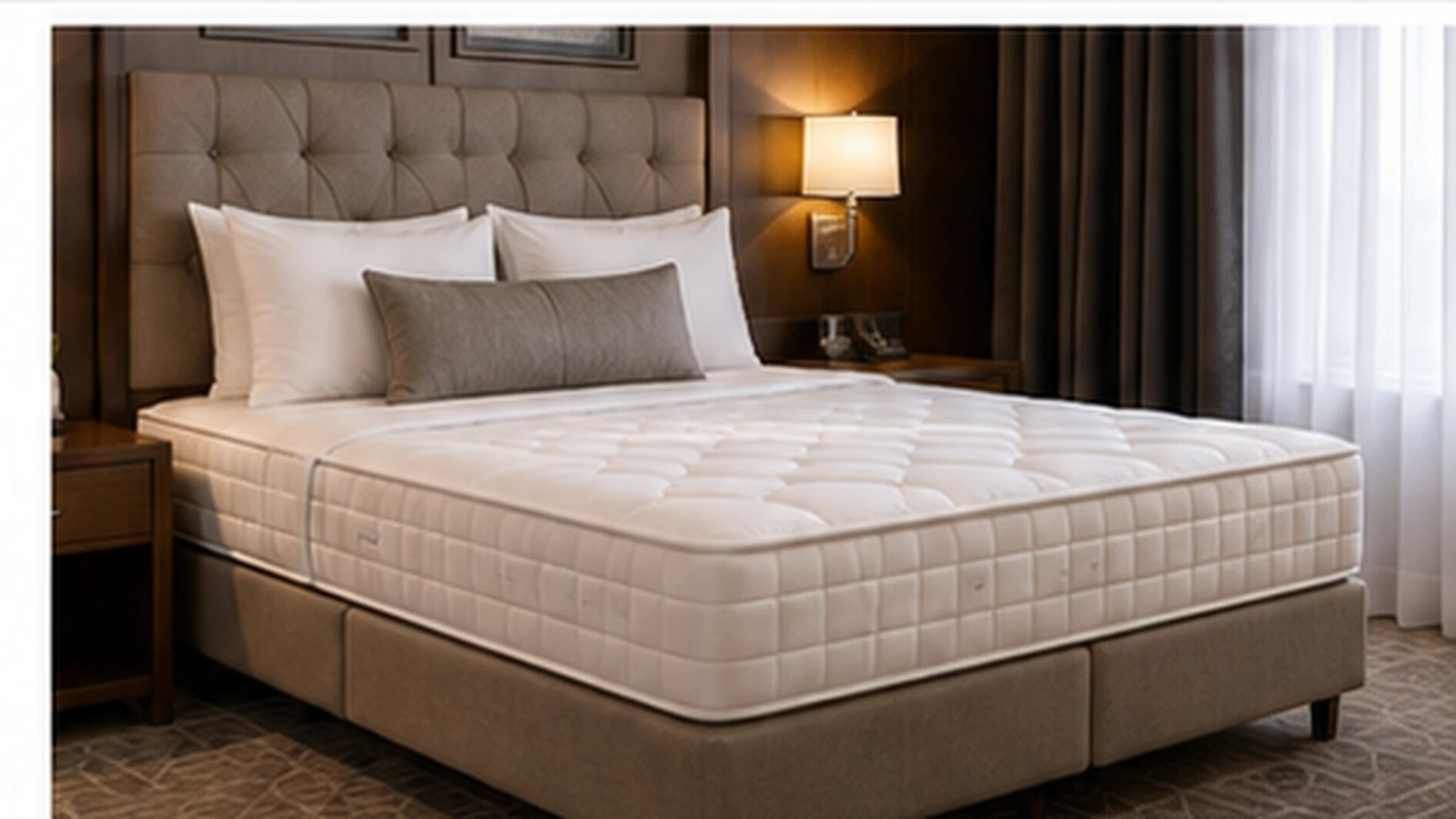
A professional hotel mattress is a combination of structural support, comfort materials, upholstery and edge construction. Procurement teams should request a clear layer-by-layer specification rather than evaluating the product only by total thickness or surface appearance.
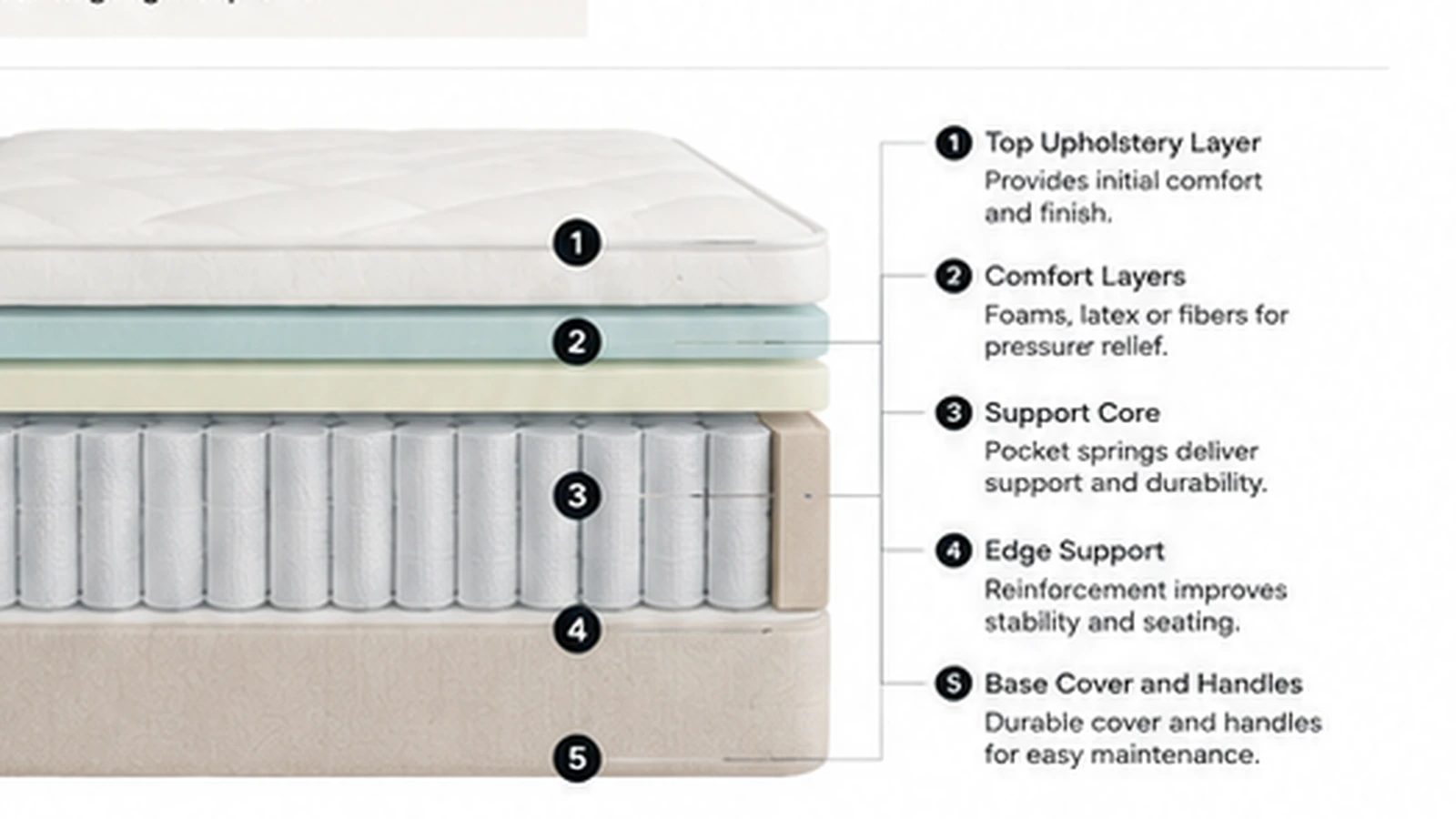
The specification may include:
- Spring or core support system
- Transition layers
- Comfort foams
- Memory foam or gel-infused layers where specified
- Quilted upholstery
- Ticking or cover fabric
- Edge reinforcement
- Insulation layers
- Removable or replaceable comfort components where applicable
Each component influences the final feel, but the overall performance depends on how these layers work together.
Compare Spring and Support Systems Correctly
Pocket Spring Systems
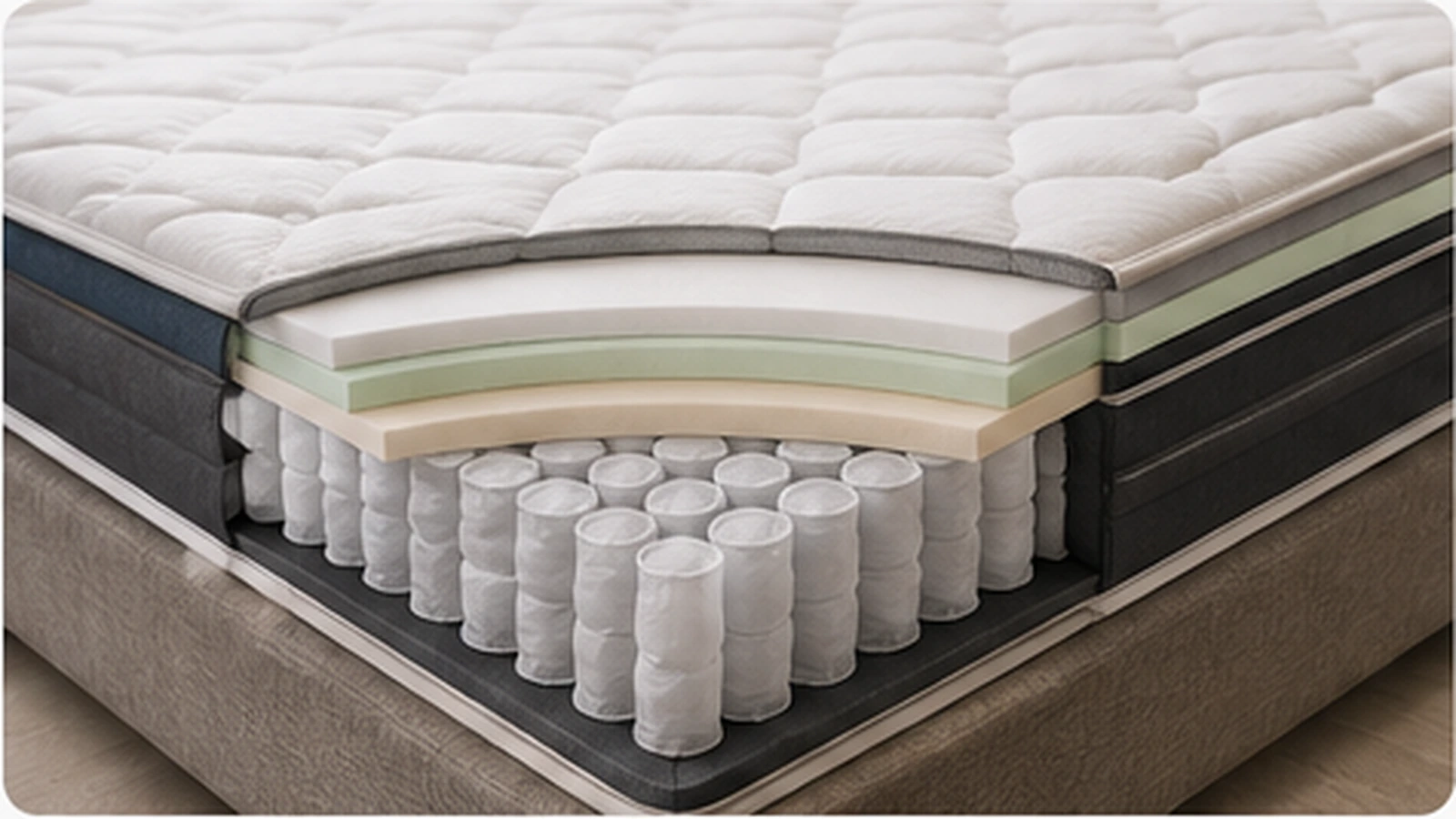
Individually pocketed springs are commonly used in hospitality mattresses because they can provide localised body support and reduce movement transfer across the sleeping surface. They are particularly relevant where two guests share a mattress or where a more responsive comfort profile is required.
However, the spring type alone does not determine quality. Review spring height, wire specification, zoning where applicable, border support and the comfort layers placed above the spring unit.
Other Spring and Support Constructions
Other spring arrangements or engineered foam-core systems may also be appropriate depending on the project. The key question is whether the complete construction delivers the required combination of support, durability, comfort and consistency for the intended hotel operation.
A supplier should be able to explain what the support core is designed to achieve and how it interacts with the mattress upholstery.
Evaluate Comfort Layers Beyond Marketing Terminology
Comfort layers shape the immediate feel of the mattress and influence pressure distribution, resilience and temperature perception. Common materials may include high-resilience foams, memory foam, gel-infused memory foam and other engineered comfort layers.
When reviewing these materials, ask:
- What is the purpose of each layer?
- What is its thickness?
- What density or performance characteristics are specified?
- How does it contribute to pressure relief or resilience?
- How does it affect heat and moisture management?
- Is it designed for repeated hospitality use?
The presence of a named material is less important than the performance of the complete mattress construction.
Select a Firmness Profile for a Broad Guest Population
There is no universal firmness that satisfies every guest. Hotels serve people with different body types, sleeping positions and comfort preferences, so an extreme specification can create unnecessary dissatisfaction.
For many properties, a balanced medium or medium-firm profile can provide a practical starting point, but the final decision should be based on the hotel concept and physical sample evaluation rather than a generic rule.
For large projects, compare sample mattresses under realistic conditions and involve representatives from operations, housekeeping and project management. Where appropriate, document the approved sample so that the production standard is clear.
Pay Particular Attention to Edge Support
Hotel guests frequently sit on the edge of the bed while dressing, using a phone, putting on shoes or handling luggage. Weak perimeter support can make an otherwise comfortable mattress feel unstable and can accelerate visible edge deformation.
Edge support should therefore be evaluated for:
- Sitting stability
- Ease of getting in and out of bed
- Resistance to perimeter collapse
- Visual shape retention
- Compatibility with twin-to-double configurations
For hotels, this is both a comfort and durability issue.
Coordinate Mattress Height with the Bed Base
Mattress thickness should never be selected in isolation. The relevant dimension for the guestroom is the total finished sleeping height once the base, mattress, protector and topper, if used, are combined.
Before approval, confirm:
- Bed base height
- Mattress height
- Topper height where applicable
- Protector thickness where relevant
- Finished sleeping height
- Headboard proportions
- Bedside table relationship
- Accessibility requirements
- Housekeeping handling requirements
An excessively high bed may be difficult to service and may create accessibility problems. A bed that is too low may conflict with the intended room design or guest expectations.
Specify Mattress Dimensions Numerically
Terms such as single, double, queen and king are not globally standardised. The same name can refer to different dimensions in different countries and hotel groups.
For international hospitality projects, specify mattress dimensions numerically in millimetres or centimetres and define acceptable manufacturing tolerances.
Coordinate the mattress size with:
- Bed base dimensions
- Headboard width
- Bedside furniture
- Room circulation
- Bed linen dimensions
- Mattress protectors
- Twin-to-double joining systems
This reduces errors between architectural drawings, purchasing documents, bedding specifications and manufacturing.
Plan Twin-to-Double Flexibility as One System
Many hotels sell the same room in either twin or double configuration. In these rooms, the mattress specification should be developed together with the bed bases, joining method, headboard and bed linen.
Simply pushing two mattresses together may leave an uncomfortable centre gap or create alignment problems. Review:
- Mattress dimensions and edge geometry
- Base dimensions
- Joining or linking system
- Height consistency
- Headboard width and position
- Topper strategy where applicable
- Bed linen for both configurations
The objective is to make both room arrangements operationally practical and visually intentional.
Consider Temperature and Moisture Management
Thermal comfort can influence sleep quality, particularly in warm climates or heavily climate-controlled rooms. Mattress construction, quilting, foam selection, cover materials and room ventilation all contribute to the guest’s temperature perception.
Procurement teams should avoid relying on a single “cooling” claim. Instead, review how the complete material system manages airflow, heat and moisture under the expected operating conditions.
Where gel-infused or other thermal-management materials are specified, ask the manufacturer to explain their location and function within the mattress construction.
Design for Housekeeping and Hygiene
A hospitality mattress is handled far more frequently than a typical residential mattress. It should therefore work with the hotel’s linen, protector, inspection and cleaning procedures.
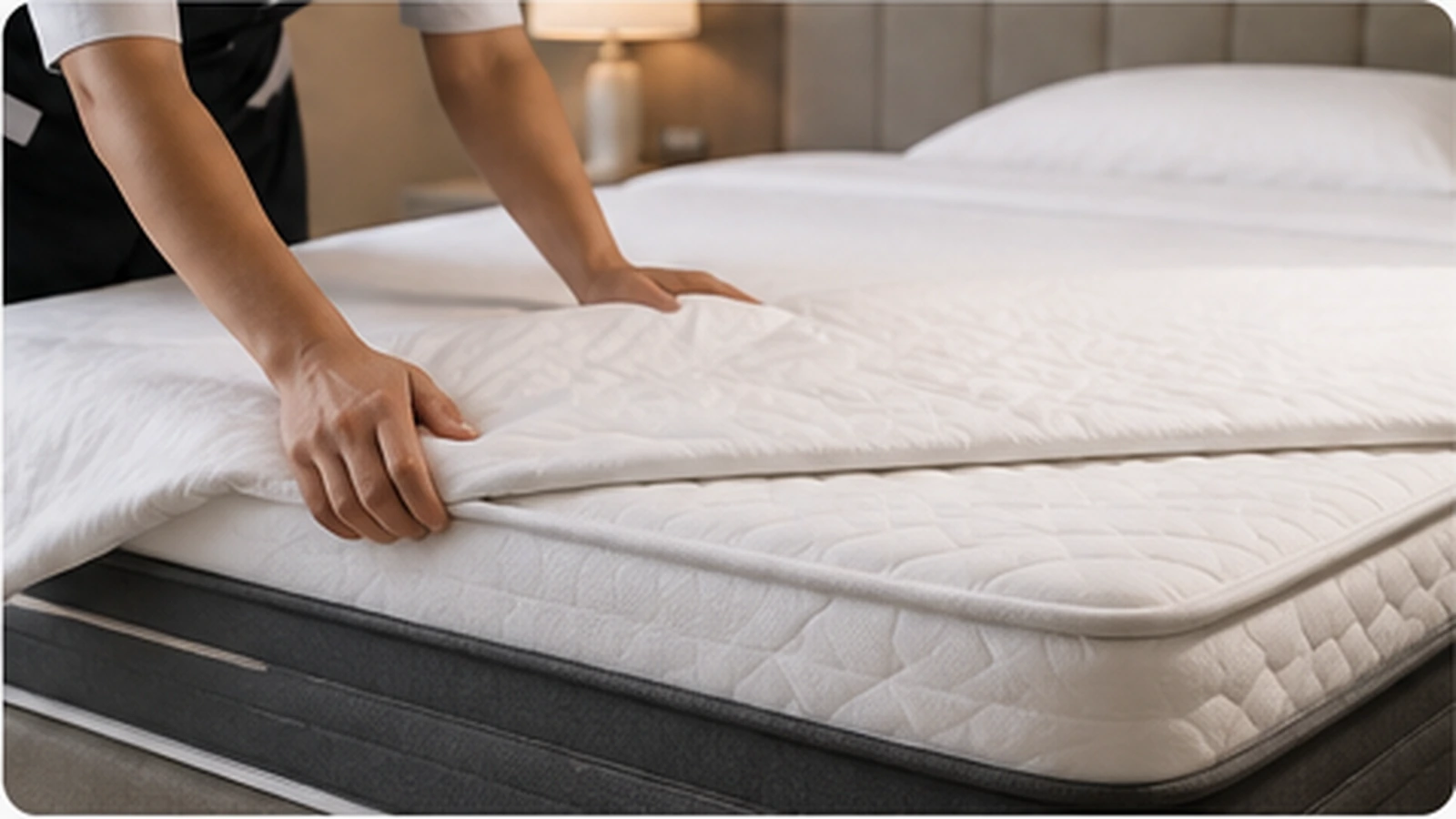
A coordinated hygiene strategy may include:
- Mattress protectors
- Washable or removable protective layers where applicable
- Easy-to-inspect mattress surfaces
- Clear cleaning instructions
- Replaceable comfort components where the product design allows
- Regular rotation or maintenance procedures where recommended
Housekeeping teams should be able to make the bed efficiently and inspect the mattress without excessive lifting or unnecessary complexity.
Review Durability as a Complete Construction
Hotel mattress durability depends on more than one material. Support core, comfort layers, edge reinforcement, stitching, quilting, ticking and the underlying bed base all influence how the product performs over time.
When comparing quotations, request information on:
- Support core construction
- Comfort-layer structure
- Edge reinforcement
- Cover or ticking specification
- Quilting and stitching
- Recommended base type
- Rotation or maintenance instructions
- Replaceable components where applicable
- Warranty conditions and exclusions
A mattress should be evaluated as part of the complete hotel bed system, not as an isolated soft furnishing.
Confirm Fire, Safety and Project Documentation Early
Hospitality mattress requirements can vary by destination, operator, consultant and project specification. Fire-performance, material, labelling or product-safety documentation may be required and should be identified before final approval.
Do not assume that one test report or certificate is automatically valid for every destination or project. The procurement team should confirm what documentation is required and communicate this to the manufacturer before production.
Where relevant, specify:
- Destination country
- Applicable hotel brand or project standard
- Required test method or certification
- Products or components covered
- Required documentation language
- Whether sample testing is required
Use Physical Samples for Major Projects
Comfort cannot be fully assessed from a technical data sheet. For significant hotel developments, sample testing is one of the most valuable stages of mattress procurement.
A useful sample review should consider:
- Initial comfort
- Body support
- Edge stability
- Finished bed height
- Visual appearance
- Base compatibility
- Ease of housekeeping
- Material finish
- Twin-to-double performance where required
Document the approved sample and any requested revisions before mass production.
Plan Replacement and Lifecycle Strategy
Hotels should consider how the mattress will be maintained and replaced over the life of the property. This is particularly important for large room inventories and phased renovation programmes.
Useful questions include:
- Can the same mattress specification be supplied later?
- Are key materials expected to remain available?
- Can removable comfort components be replaced where the design allows?
- How should the mattress be rotated or inspected?
- What signs indicate that replacement is required?
- Can additional units be ordered for future rooms?
A maintainable specification can reduce disruption and help the property preserve a consistent guest experience.
Compare Total Project Value, Not Only Unit Price
A hotel mattress is a long-term operational asset. The lowest initial purchase price may not represent the lowest cost over the life of the property.
A professional comparison should consider:
- Complete mattress construction
- Comfort profile
- Support and edge stability
- Expected durability
- Housekeeping practicality
- Protection and hygiene requirements
- Replacement strategy
- Sample approval
- Compliance documentation
- Packing and logistics
- Supplier support for future additions
The objective is to compare equivalent scopes rather than simply comparing headline prices.
Build a Clear Hotel Mattress Specification
For each mattress type, provide:
- Required quantity
- Exact width, length and height
- Room and bed type
- Target comfort or firmness profile
- Required support system
- Comfort-layer requirements where specified
- Edge-support requirement
- Cover or ticking requirement
- Twin-to-double requirement
- Protector or topper requirement
- Finished bed-height target
- Required project documentation
- Packing and delivery requirements
Also provide the project location, property type, number of rooms, target opening date and any relevant operator or brand standards.
Common Hotel Mattress Procurement Mistakes
Choosing by Thickness Alone
A thicker mattress is not automatically more comfortable or durable. Evaluate the complete construction and finished bed height.
Using Only Marketing Labels
Descriptions such as “luxury” or “orthopaedic” do not replace a technical specification. Request details of the support and comfort layers.
Ignoring the Bed Base
The mattress and base function together. A mismatch can affect comfort, support, height and long-term performance.
Skipping Sample Approval
For large projects, selecting a mattress without physical evaluation can create expensive problems after production begins.
Assuming Size Names Are Universal
Always use numerical dimensions for international projects.
Leaving Compliance Requirements Until the End
Required tests and documentation can affect material selection, lead time and cost. Confirm them before production.
Hotel Mattress Procurement Checklist
Project Information
- Hotel type and positioning
- Country and project location
- Room count and room mix
- Target opening or renovation date
- Operator or brand standards
Mattress Specification
- Dimensions
- Height
- Support core
- Comfort layers
- Target firmness
- Edge support
- Cover or ticking
- Twin-to-double requirement
- Protector or topper
Project Approval
- Physical sample
- Bed-base compatibility
- Finished bed-height approval
- Required certificates or documentation
- Packing requirements
- Delivery schedule
Frequently Asked Questions
What type of mattress is best for hotels?
There is no single mattress construction that is best for every hotel. The correct choice depends on property positioning, guest profile, target comfort, bed-base design, expected usage, maintenance requirements and project standards.
Are pocket spring mattresses suitable for hotels?
Pocket spring systems can be well suited to hospitality use because they can provide localised support and reduced movement transfer. Their performance should be evaluated together with comfort layers, edge support and the complete mattress construction.
What firmness should a hotel mattress have?
Most hotels need a broadly acceptable comfort profile rather than an extreme firmness level. Physical sample testing is recommended, particularly for significant projects.
Is a thicker hotel mattress better?
No. Thickness alone does not determine comfort or quality. Support system, comfort layers, edge construction, material performance and finished bed height are more important.
How should hotels specify mattress size?
Use exact numerical dimensions in millimetres or centimetres rather than relying only on names such as queen or king, especially for international projects.
Should a hotel mattress be tested with the bed base?
Yes. Mattress feel, support and finished height are influenced by the base. For major projects, the approved mattress should be evaluated on the intended hotel bed base.
Specify the Complete Sleep Experience
A successful hotel mattress specification balances guest comfort, commercial durability, housekeeping efficiency, room design and long-term replacement planning.
The strongest projects treat the mattress as part of a coordinated hotel bed system rather than an isolated product. Clear dimensions, a documented comfort target, physical sample approval and early confirmation of project requirements help reduce uncertainty before production.
Explore OTELSAN hotel mattresses and hotel bed solutions, review the online catalogue or prepare a project quotation request for your hotel opening, renovation or replacement programme.
For project-specific support, share your room programme, quantities, mattress dimensions, target comfort profile and destination with the OTELSAN export team.