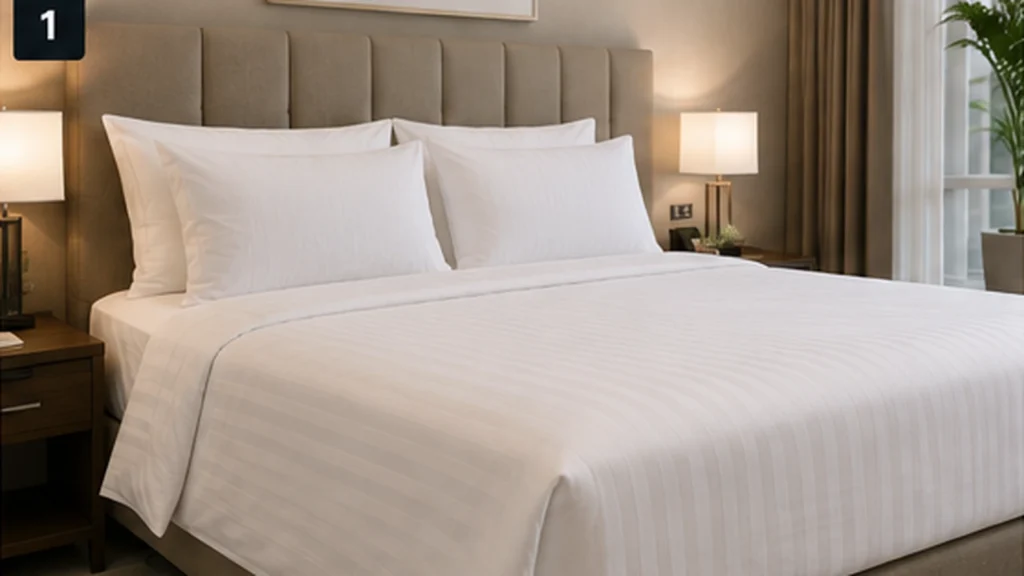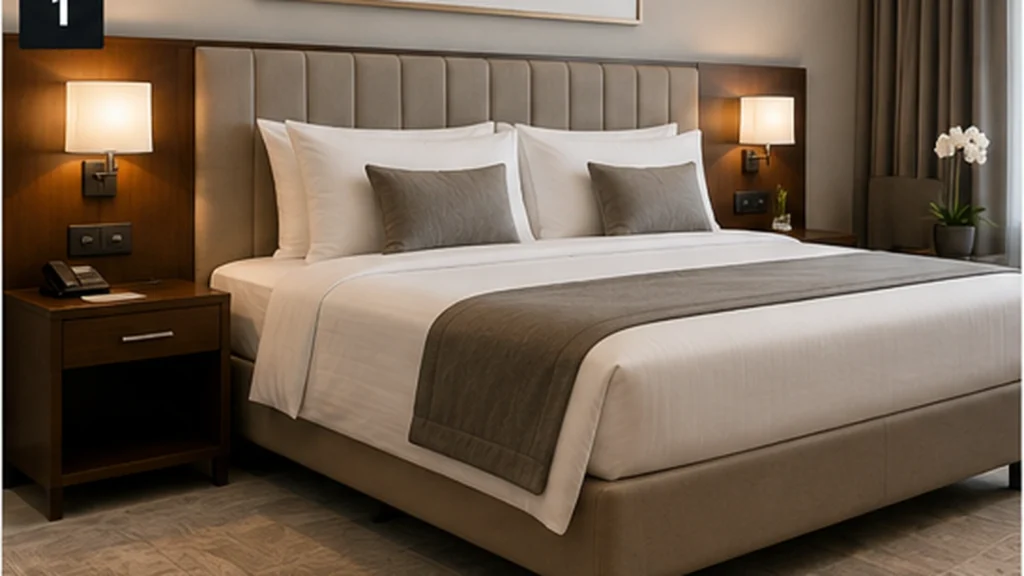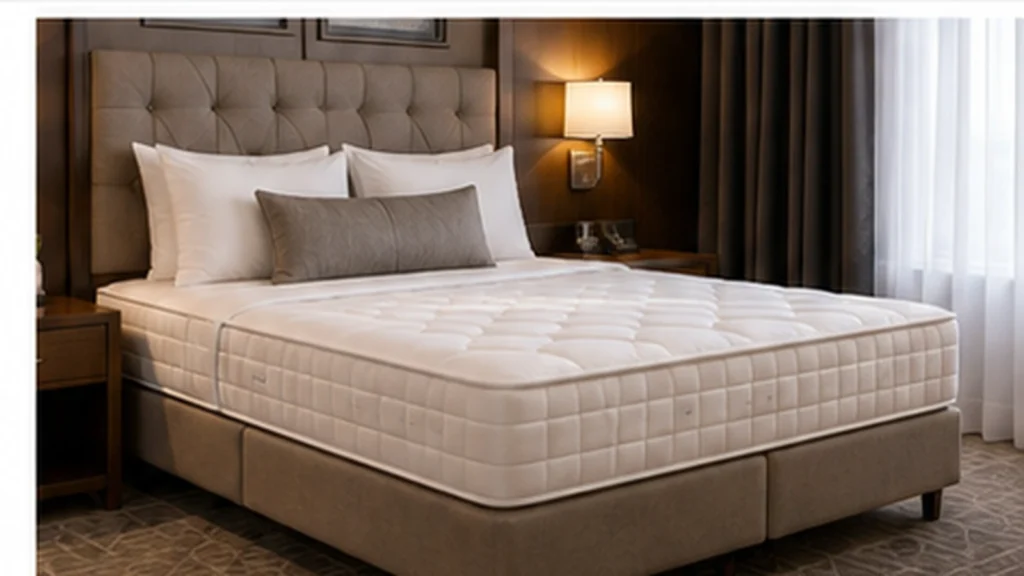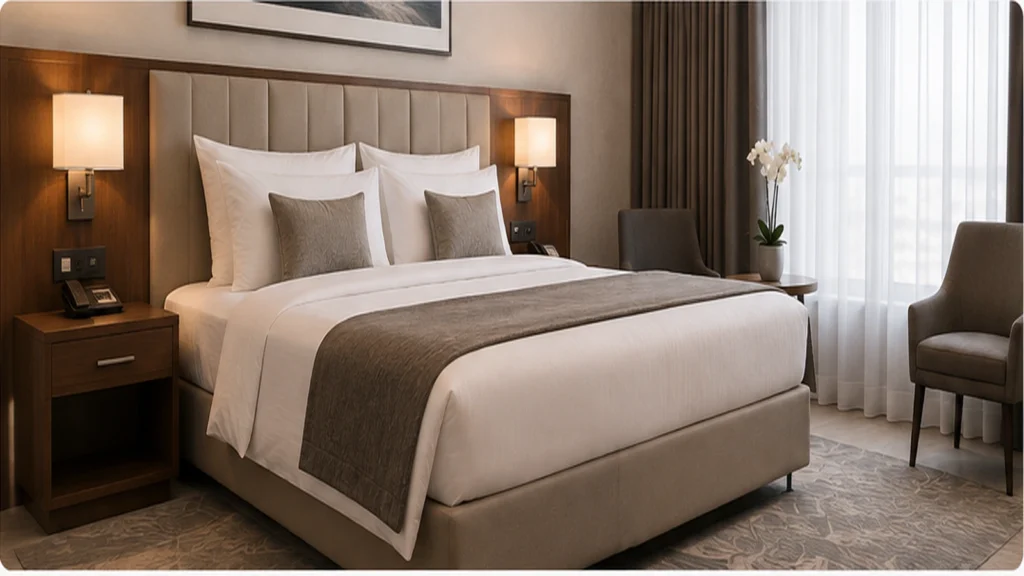
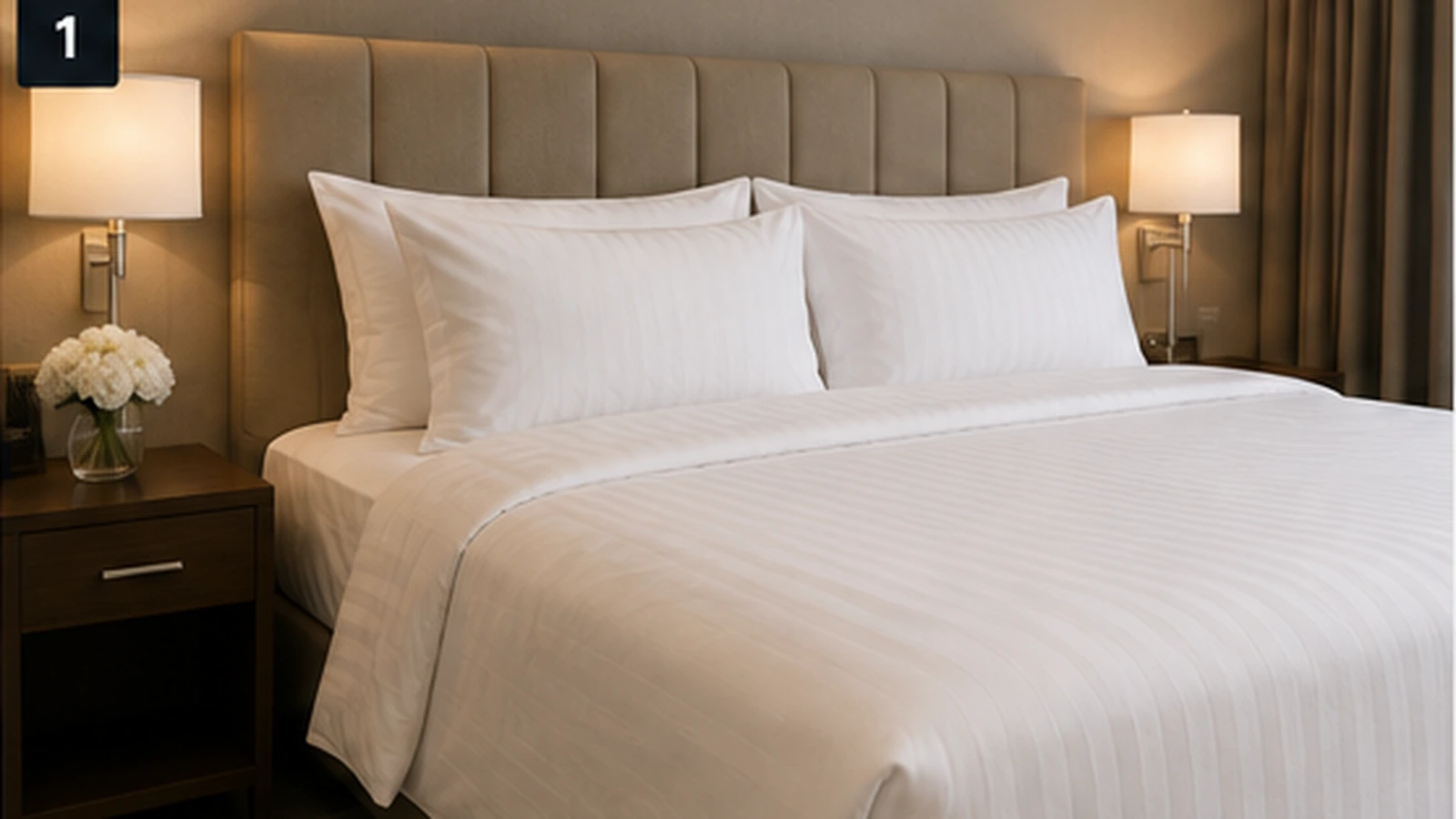
QUICK OVERVIEW
Key Takeaways
- Specify hotel bed linen from the actual mattress, duvet and pillow dimensions rather than relying only on generic size names.
- Evaluate fibre composition, weave, fabric weight, finishing and laundry performance alongside thread count.
- Allow for shrinkage and test representative samples under the hotel’s actual commercial laundry conditions.
- Choose fitted-sheet depth, duvet-cover construction and pillowcase dimensions for efficient housekeeping and consistent room presentation.
- Plan linen par stock according to occupancy, laundry turnaround, reserve requirements and replacement lead time.
- Approve washed samples, stitching, labels and replacement availability before mass production.
The correct specification depends on the hotel category, climate, laundry process, mattress dimensions, housekeeping standards, expected occupancy, replacement strategy and guest comfort positioning. Sheets, duvet covers, pillowcases, protectors, duvets and pillows should be coordinated with the complete hotel bed so that dimensions, care procedures and room presentation remain consistent across the property.
Start with the Hotel Room and Bed Programme
Before choosing fabrics or constructions, define the complete room programme. The number and size of beds, mattress heights and linen-change procedures will determine the quantities and dimensions required.
Important project questions include:
- How many guestrooms and suites are included?
- Which rooms use single, twin, double, queen or king-size beds?
- Will twin beds convert into double configurations?
- What are the exact mattress dimensions and finished bed heights?
- Are toppers or thick mattress protectors used?
- What pillow quantities and sizes are required per room?
- Will the hotel use duvets, blankets, bedspreads or a combination?
- How frequently will linen be changed?
- Is laundry handled in-house or by an external commercial laundry?
- What are the hotel’s preferred washing, drying and ironing conditions?
- What level of guest comfort and room presentation is expected?
A room-by-room textile schedule helps purchasing teams calculate the initial par stock and prevents size mismatches between mattresses, protectors, sheets and duvet covers.
Understand the Main Hotel Bed Linen Components
A complete hotel bedding programme may include several coordinated textile layers. Each product has a different function and should be specified independently.
Fitted and Flat Sheets
Sheets form the primary textile contact surface for the guest. They should combine comfort, dimensional stability, laundry durability and ease of bed-making.
For fitted sheets, confirm:
- Mattress width and length
- Mattress height
- Protector and topper build-up
- Pocket depth
- Elastic construction
- Shrinkage allowance
Flat sheets should provide sufficient tuck-in allowance for the property’s bed-making method and mattress height.
Duvet Covers
Duvet covers protect the duvet and form a major visible part of the finished bed. Their size should allow the duvet to sit evenly without excessive movement or bunching.
Review closure design, seam strength, corner construction and laundry handling. Open-end, envelope, button or other closure systems may be used depending on the hotel’s operational preference.
Pillowcases
Pillowcases should match the actual pillow dimensions and allow efficient insertion and removal by housekeeping staff. Envelope depth, seam construction and shrinkage tolerance should be confirmed.
Mattress Protectors
Mattress protectors help preserve hygiene and reduce exposure to moisture and staining. Their construction should be compatible with the mattress feel and the hotel’s washing procedures.
Duvets and Pillows
Although not bed linen in the narrow sense, duvets and pillows should be coordinated with the textile programme because their dimensions, filling characteristics and care requirements directly affect covers and pillowcases.
Choose the Fabric According to Performance, Not Only Feel
Hotel bed linen fabrics are commonly produced from cotton, polyester-cotton blends or other engineered textile constructions. The right choice depends on the desired balance between guest comfort, laundry efficiency, durability and operating cost.
Cotton
Cotton is widely preferred for its natural hand feel, breathability and guest familiarity. Different cotton yarns and weave structures can produce significantly different results, so the word “cotton” alone is not a complete specification.
Polyester-Cotton Blends
Blended fabrics can offer improved dimensional stability, faster drying and easier ironing depending on the construction. They may be useful for properties where laundry efficiency and repeated industrial washing are major priorities.
Other Performance Constructions
Specialised fibres, finishing treatments or blended yarns may be used where the project requires particular performance characteristics. Any claim should be evaluated together with actual fabric weight, weave, care instructions and sample testing.
Understand Thread Count Correctly
Thread count is frequently used in consumer marketing, but it should not be treated as a standalone measure of hotel linen quality. A higher number does not automatically mean better comfort, durability or suitability for commercial laundry.
Fabric performance also depends on:
- Yarn quality
- Yarn fineness
- Fibre composition
- Weave construction
- Fabric weight
- Finishing process
- Shrinkage control
- Stitching quality
- Laundry conditions
A well-balanced fabric with an appropriate construction can perform better in hospitality use than a higher thread-count fabric designed mainly for retail presentation.
Compare Percale, Sateen and Other Weave Structures
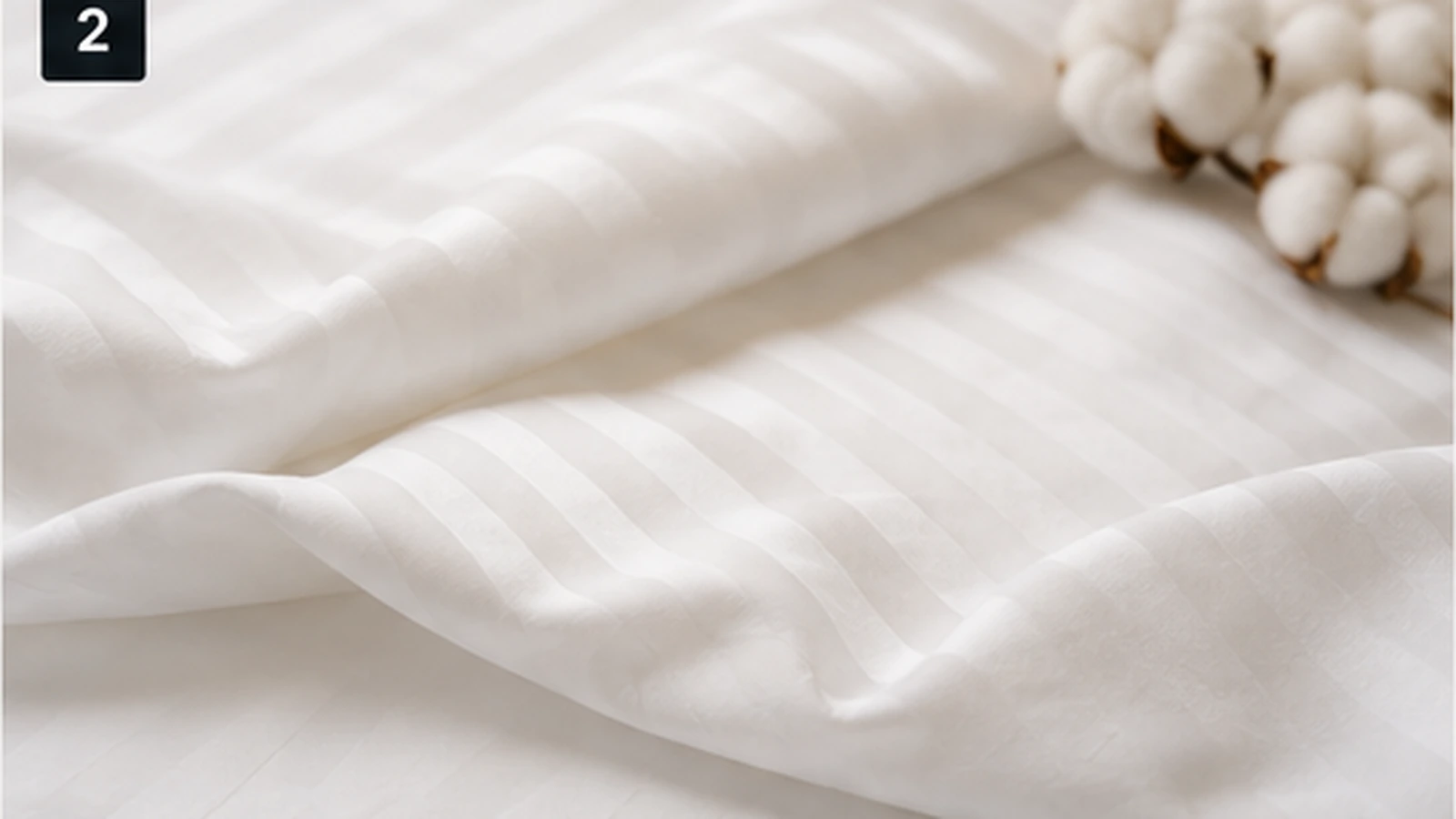
Percale
Percale constructions typically provide a crisp, clean hand feel and a matte appearance. They are often selected for hotels seeking a fresh and structured bed presentation.
Sateen
Sateen constructions can provide a smoother surface and more lustrous appearance. The final feel and durability still depend on yarn and fabric quality, not only the weave name.
Jacquard and Decorative Weaves
Stripes, subtle patterns and woven hotel designs can add visual identity without relying on printed decoration. Decorative weave structures should be tested for laundry durability and consistency across production batches.
Specify Fabric Weight and Construction
Fabric weight can help explain how substantial a textile feels, but it should be considered together with yarn and weave. Two fabrics with similar weight can perform differently because of their construction.
For professional specifications, request:
- Fibre composition
- Yarn specification where relevant
- Weave type
- Thread count where used
- Fabric weight
- Finished width
- Expected dimensional change
- Colour or whiteness specification
- Care instructions
Coordinate Linen Dimensions with the Mattress and Duvet
Incorrect sizing is one of the most common hotel linen procurement problems. The actual finished mattress dimensions, mattress height, topper and protector should be known before fitted sheets or bed presentation dimensions are approved.
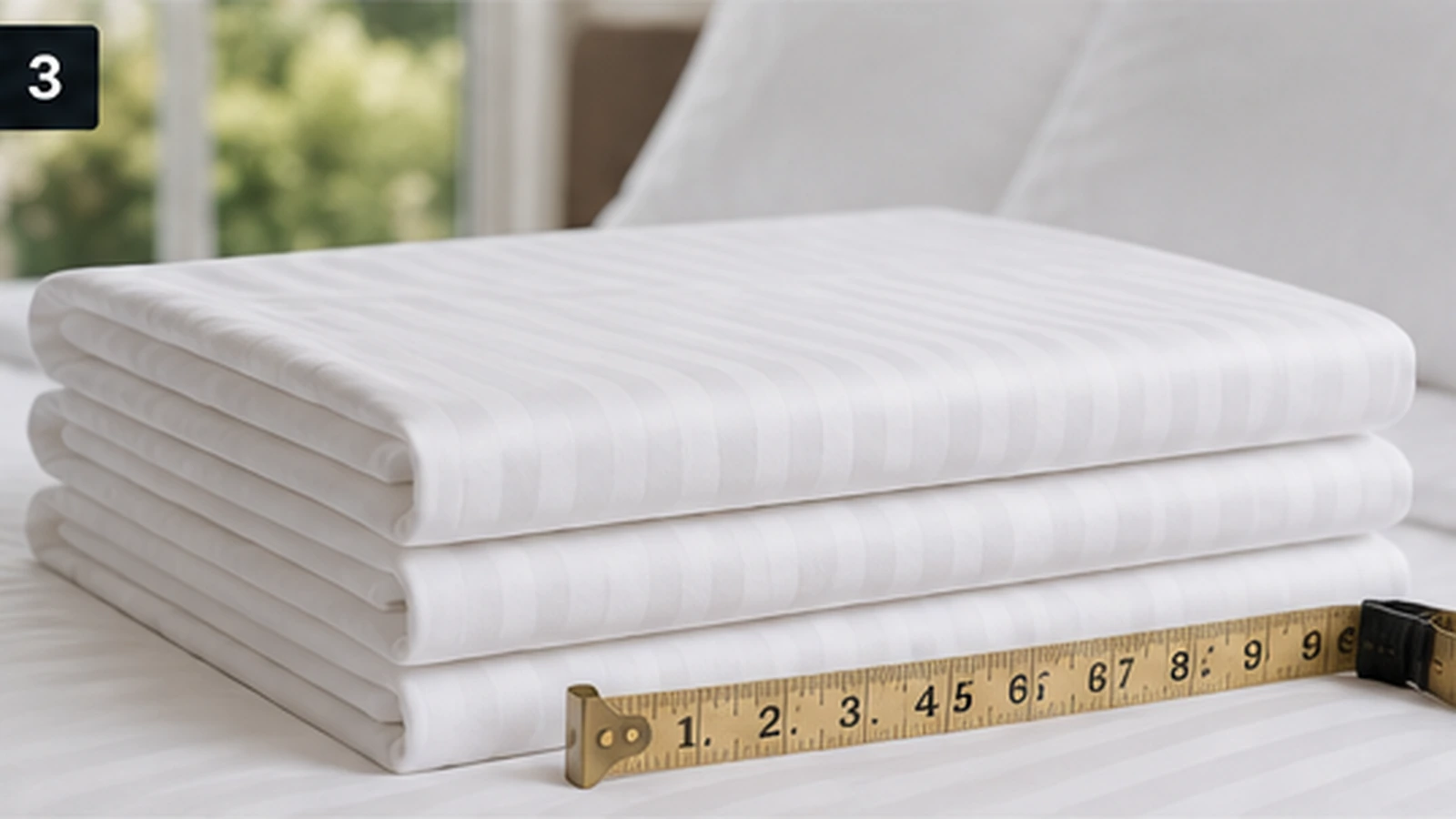
Similarly, duvet covers should be matched to the actual duvet dimensions rather than selected from a generic size name.
For each item, specify dimensions numerically in centimetres or millimetres and confirm whether the measurement refers to pre-wash or finished size.
Allow for Shrinkage and Commercial Laundry
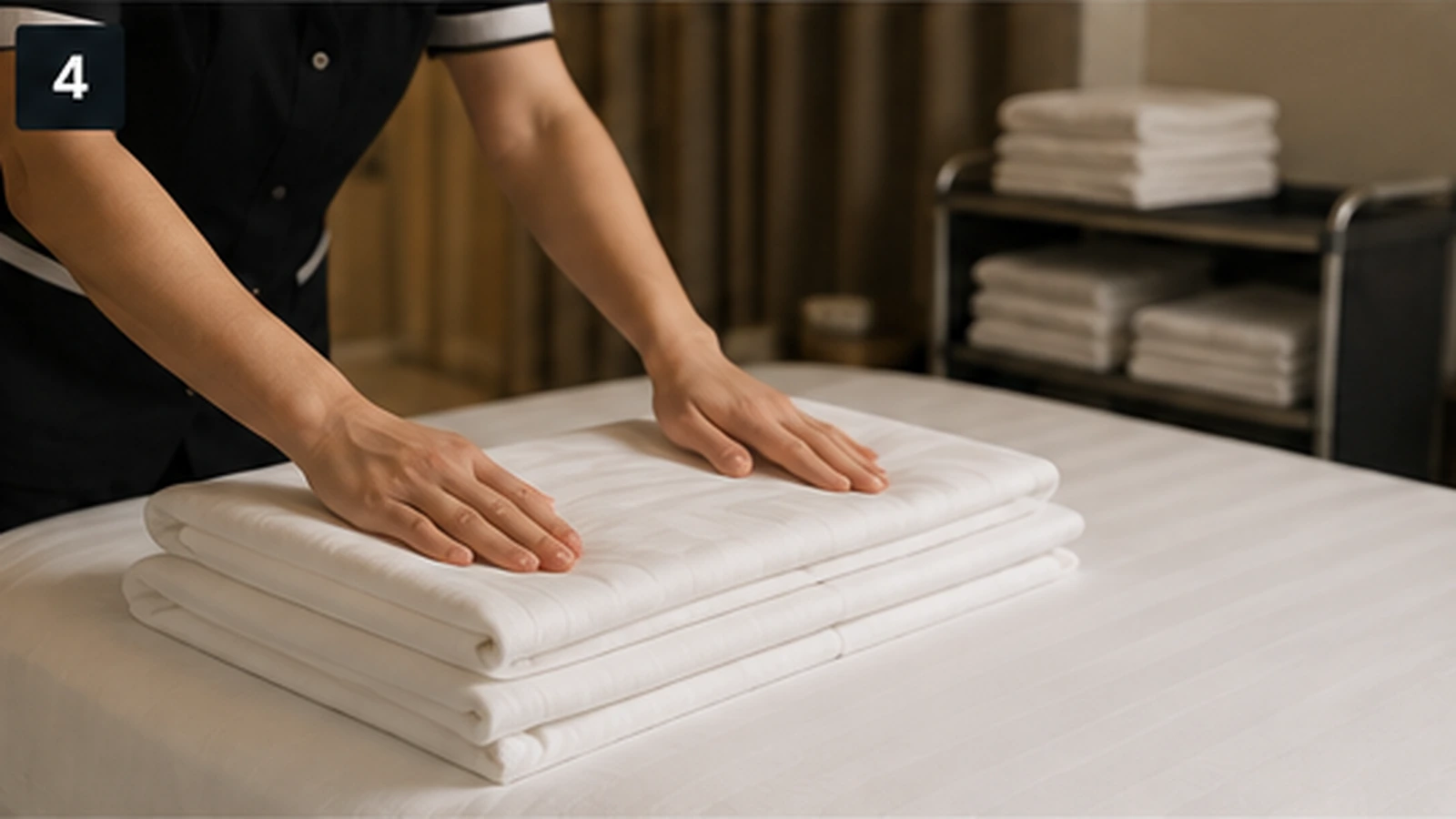
Hotel textiles are repeatedly exposed to washing, drying, ironing and finishing processes. Dimensional stability is therefore a critical procurement issue.
Before approval, confirm:
- Expected shrinkage after washing
- Recommended wash temperature
- Drying method
- Ironing or calendering conditions
- Use of bleach or other chemicals where applicable
- Maximum process temperatures
- Colour-care limitations
For project supply, samples should ideally be evaluated after representative commercial laundry cycles rather than only in their unused condition.
Design for Efficient Housekeeping
Housekeeping productivity is influenced by textile dimensions, closure systems, fabric handling and the ease with which items can be identified and replaced.
Consider:
- Easy identification of sizes
- Consistent folding dimensions
- Practical duvet-cover closure systems
- Appropriate fitted-sheet pocket depth
- Reasonable fabric weight for handling
- Colour coding or internal labels where useful
- Clear care labels
- Standardisation across room types where possible
Small improvements in handling time can become significant when repeated across hundreds of rooms every day.
Plan Linen Par Stock and Replacement Quantities
Hotels need more than one set of linen per bed. Operational inventory must account for items in guestrooms, items in laundry, clean reserve stock, damaged pieces and peak occupancy.
The correct par level depends on:
- Occupancy
- Laundry turnaround time
- In-house or outsourced laundry
- Delivery frequency
- Emergency reserve requirements
- Seasonality
- Replacement lead time
Rather than applying one universal par number, the hotel should calculate stock according to its actual laundry cycle and operating model.
Use Product Coding and Labelling for Large Properties
Large hotels and multi-property groups benefit from clear internal identification. Labels or product codes can distinguish room type, bed size, product specification or ownership.
A structured coding system can support:
- Laundry sorting
- Inventory control
- Replacement ordering
- Multi-property operations
- Housekeeping training
- Quality inspections
Evaluate Stitching and Seam Construction
Seams are exposed to repeated washing, mechanical handling and tension during bed-making. Poor stitching can shorten the useful life of an otherwise good fabric.
Sample inspection should include:
- Stitch density
- Seam straightness
- Thread quality
- Reinforcement at stress points
- Hem consistency
- Corner construction
- Closure durability
- Loose thread control
Consider White Linen and Coloured Linen Differently
White bed linen remains common in hotels because it supports a clean, consistent visual standard and can simplify replacement matching. However, whiteness, optical brighteners, laundry chemistry and long-term colour consistency should be managed carefully.
Coloured or decorative textiles require additional attention to colourfastness, batch consistency and replacement availability. Approve production samples under the room’s actual lighting conditions where possible.
Review Guest Comfort Alongside Laundry Efficiency
The softest-feeling fabric is not always the most practical for an intensive hotel operation, and the easiest fabric to process is not always the most suitable for the property’s guest positioning.
The best specification balances:
- Hand feel
- Breathability
- Visual appearance
- Durability
- Drying time
- Ironing performance
- Shrinkage
- Replacement cost
- Guest expectations
Confirm Safety, Material and Destination Requirements
Textile requirements can vary by country, operator, consultant and project type. Certain items may be subject to material, chemical, labelling, fire-performance or other documentation requirements.
Before production, confirm:
- Destination country
- Applicable hotel or project standard
- Required material declarations
- Required tests or certificates
- Labelling language
- Care-label requirements
- Any restricted substances or chemical requirements
Documentation should be agreed before production rather than requested after goods are completed.
Approve Samples After Washing
A hotel linen sample can change after its first laundry cycle. For important projects, approval should therefore consider washed performance as well as initial appearance.
Evaluate:
- Dimensional change
- Surface feel
- Colour or whiteness
- Seam stability
- Pilling or surface change
- Ironing result
- Duvet and pillow fit after washing
- Overall room presentation
Build a Clear Hotel Bed Linen Specification
For each textile item, provide:
- Product type
- Required quantity
- Exact finished dimensions
- Fibre composition
- Weave type
- Thread count where relevant
- Fabric weight where relevant
- Colour or whiteness requirement
- Closure construction
- Label requirements
- Expected shrinkage
- Wash and care requirements
- Required project documentation
- Packing requirements
Also provide the hotel type, room mix, bed and mattress dimensions, laundry model, target opening date and delivery schedule.
Common Hotel Bed Linen Procurement Mistakes
Buying by Thread Count Alone
Thread count does not describe fibre quality, weave, durability or laundry performance. Review the complete fabric specification.
Using Generic Size Names
Single, queen and king dimensions vary between markets. Specify actual measurements.
Ignoring Shrinkage
Textiles that fit correctly before washing may become unsuitable after repeated commercial laundry if shrinkage has not been considered.
Not Testing with the Hotel Laundry Process
Commercial washing and finishing conditions may differ significantly from domestic care. Samples should be tested under representative conditions.
Underestimating Par Stock
Insufficient linen inventory can create operational pressure when occupancy is high or laundry turnaround is delayed.
Ignoring Replacement Availability
Hotels should consider whether matching fabric, colours and dimensions can be supplied for future replacements.
Hotel Bed Linen Procurement Checklist
Room and Bed Information
- Room count
- Bed configurations
- Mattress dimensions
- Mattress heights
- Duvet and pillow sizes
Fabric Specification
- Fibre composition
- Weave
- Thread count where applicable
- Fabric weight
- Colour or whiteness
- Finished dimensions
- Shrinkage tolerance
Operational Requirements
- Laundry model
- Wash temperature
- Drying method
- Ironing process
- Par stock
- Labels and coding
- Replacement strategy
Project Approval
- Unwashed sample
- Washed sample
- Room presentation approval
- Required documentation
- Packing
- Delivery schedule
Frequently Asked Questions
What thread count is best for hotel sheets?
There is no single ideal thread count for every hotel. Fibre quality, weave, fabric weight, finishing, laundry durability and guest comfort should be evaluated together rather than using thread count alone.
Is 100% cotton always better for hotels?
Not necessarily. Cotton can provide excellent comfort, while polyester-cotton blends may offer advantages in dimensional stability, drying and ironing. The correct choice depends on the hotel’s positioning and laundry operation.
What is the difference between percale and sateen?
Percale generally provides a crisper, matte feel, while sateen can feel smoother and have more lustre. Actual performance depends on yarn, fabric construction and finishing quality.
How should hotel sheets be sized?
Use the exact mattress width, length and height, including any topper or protector. Fitted-sheet pocket depth and shrinkage allowance should also be considered.
How many sets of linen does a hotel need?
The required par stock depends on occupancy, laundry turnaround, reserve requirements and replacement lead times. It should be calculated according to the hotel’s actual operating model.
Should hotel linen be washed before final approval?
For significant projects, yes. Washed samples help verify shrinkage, surface feel, seam stability and finished appearance under realistic laundry conditions.
Specify Bed Linen as an Operational Textile System
A successful hotel linen programme balances guest comfort, visual presentation, commercial laundry performance, housekeeping efficiency and long-term replacement planning.
For the strongest result, coordinate sheets, duvet covers, pillowcases, protectors, duvets and pillows with the exact bed and mattress dimensions from the beginning of the project.
Explore OTELSAN hotel textile and hotel bed solutions, review the online catalogue or prepare a project quotation request for your hotel opening, renovation or textile replacement programme.
For project-specific support, share your room schedule, bed dimensions, required quantities, fabric preferences, laundry conditions and destination with the OTELSAN export team.