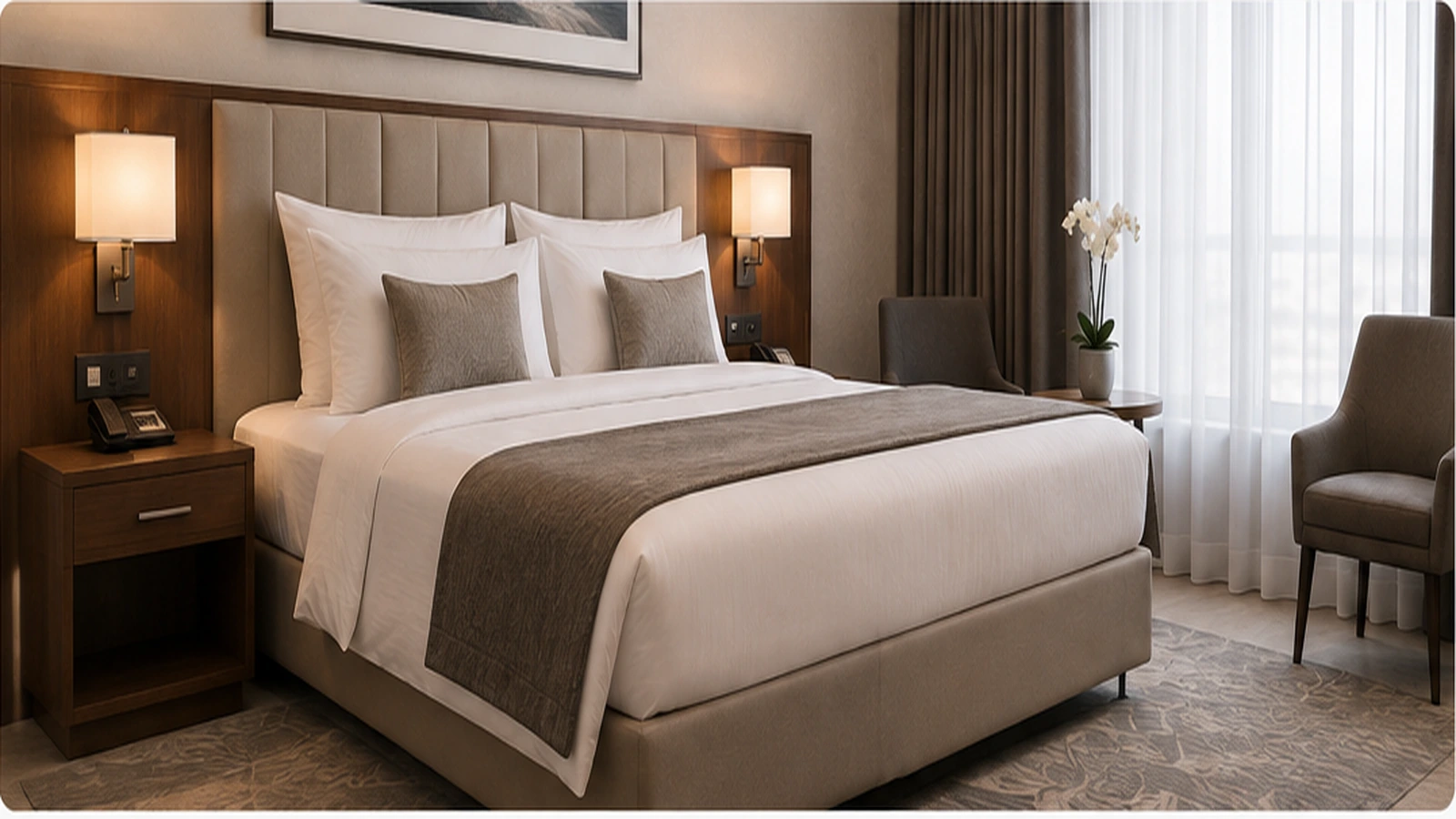
QUICK OVERVIEW
Key Takeaways
- Treat the hotel bed as a complete sleep system combining the bed base, mattress and bedding requirements.
- Define room types, bed dimensions and twin-to-double flexibility before finalising the specification.
- Select mattresses according to comfort, durability, edge support, housekeeping needs and expected usage.
- Evaluate finished bed height, hygiene, cleaning access and maintenance requirements alongside guest comfort.
- Confirm destination-specific fire, safety and compliance requirements before production.
- Consider logistics, replacement strategy and total project value rather than comparing unit price alone.
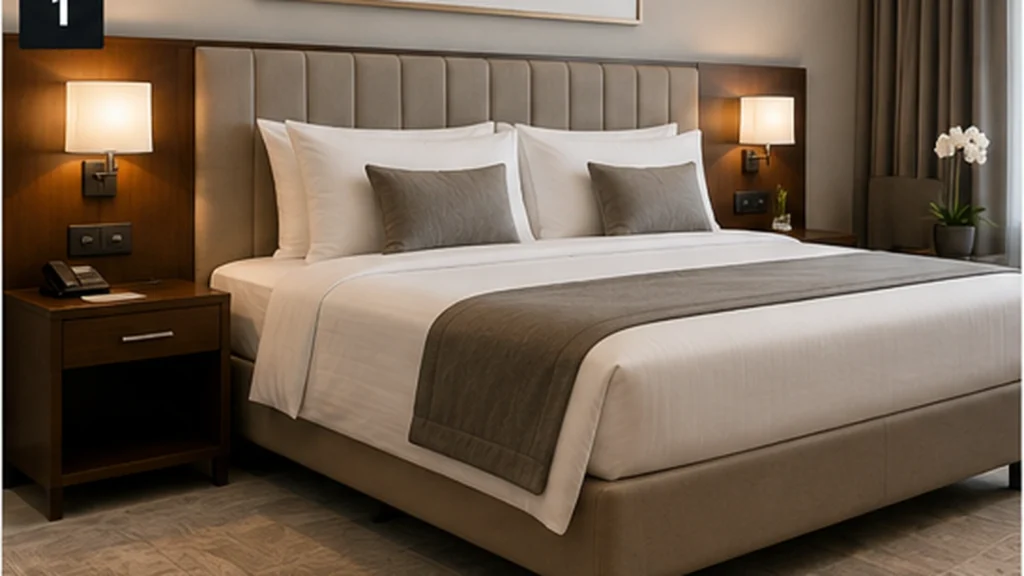
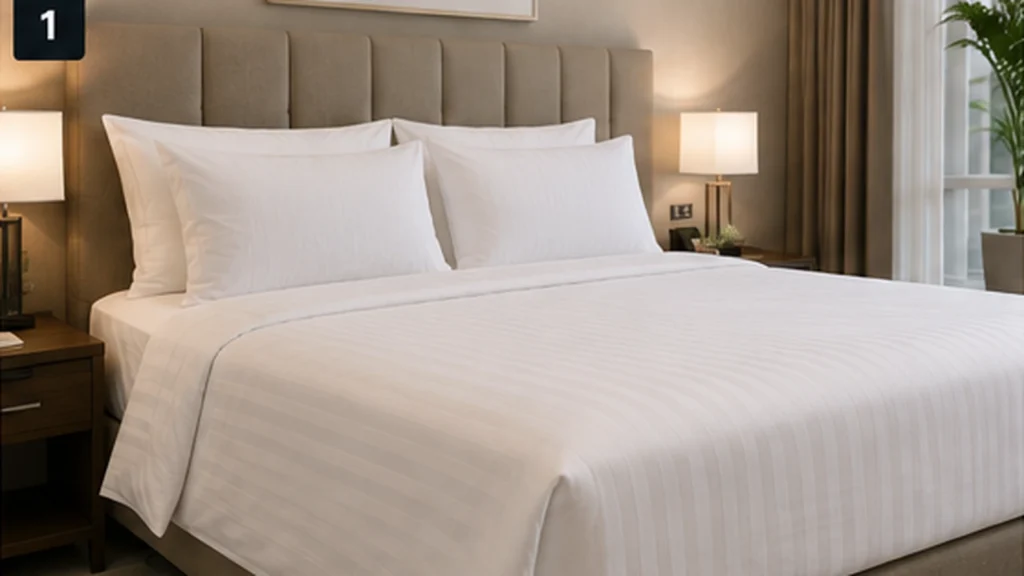
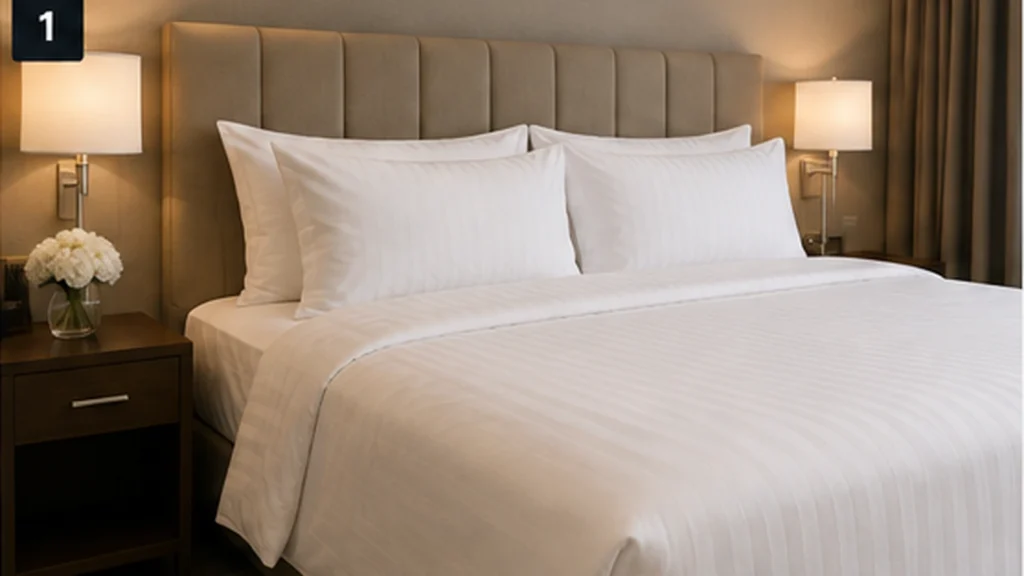
Choosing hotel beds for a hospitality project is not simply a matter of selecting a mattress and a bed base that look suitable in a catalogue. A hotel bed is a working asset that must support guest comfort, housekeeping efficiency, room design, repeated daily use, maintenance and long-term replacement planning.
The correct specification depends on the property type, room category, target guest profile, operational model and destination requirements. A city hotel, resort, serviced apartment, extended-stay property and luxury hotel may all require different combinations of bed bases, mattresses, protectors, headboards and extra-bed solutions.
This guide explains how hotel owners, operators, procurement teams, interior designers and project managers can evaluate hotel beds as a complete hospitality system rather than as isolated products.
What Makes a Hotel Bed Different from a Residential Bed?
A hotel bed is used in a demanding commercial environment. It may accommodate different guests every night, be cleaned and remade frequently, be moved during room maintenance, and be expected to maintain a consistent appearance and comfort level across dozens or hundreds of rooms.
For this reason, a professional hotel bed specification should consider the complete system:
- Bed base or foundation
- Mattress construction
- Overall bed height
- Edge support and sitting stability
- Mattress protector and hygiene layers
- Headboard interface where applicable
- Joining or separation requirements for twin and double configurations
- Housekeeping access
- Replacement and refurbishment strategy
- Packing, delivery and room-by-room installation planning
The best solution is therefore not necessarily the thickest mattress or the most expensive base. It is the system that delivers the required comfort, durability, appearance and operational efficiency for the specific hotel.
Begin with the Hotel Concept and Room Programme
Bed selection should begin with the room programme, not with a product model. Before requesting quotations, define how the property will use each bed type and how many configurations are required.
Important project questions include:
- How many guestrooms and suites are included?
- Which room categories require single, twin, double or king-size arrangements?
- Will twin beds need to convert into a larger sleeping surface?
- Are accessible rooms subject to specific height or clearance requirements?
- Will extra beds or foldable guest beds be required?
- What is the target guest segment and expected average length of stay?
- What level of firmness and comfort positioning is intended?
- Are there brand-standard dimensions, fabrics, colours or headboard details?
- Which cleaning and maintenance procedures will the housekeeping team use?
- What are the destination country’s applicable fire, safety and product-compliance requirements?
Answering these questions early helps prevent a common procurement problem: ordering a single bed specification for every room even though the property has several operational needs.
OTELSAN Project Note: Prepare a room-by-room bed schedule before finalising quantities. The schedule should identify room type, bed size, mattress specification, base type, headboard requirement and any twin-to-double or extra-bed requirement.
Choose the Bed Base as Part of the Complete Sleep System
The bed base supports the mattress structurally and also influences room appearance, housekeeping access, overall bed height and long-term stability. Its specification should therefore be coordinated with the mattress rather than purchased independently.
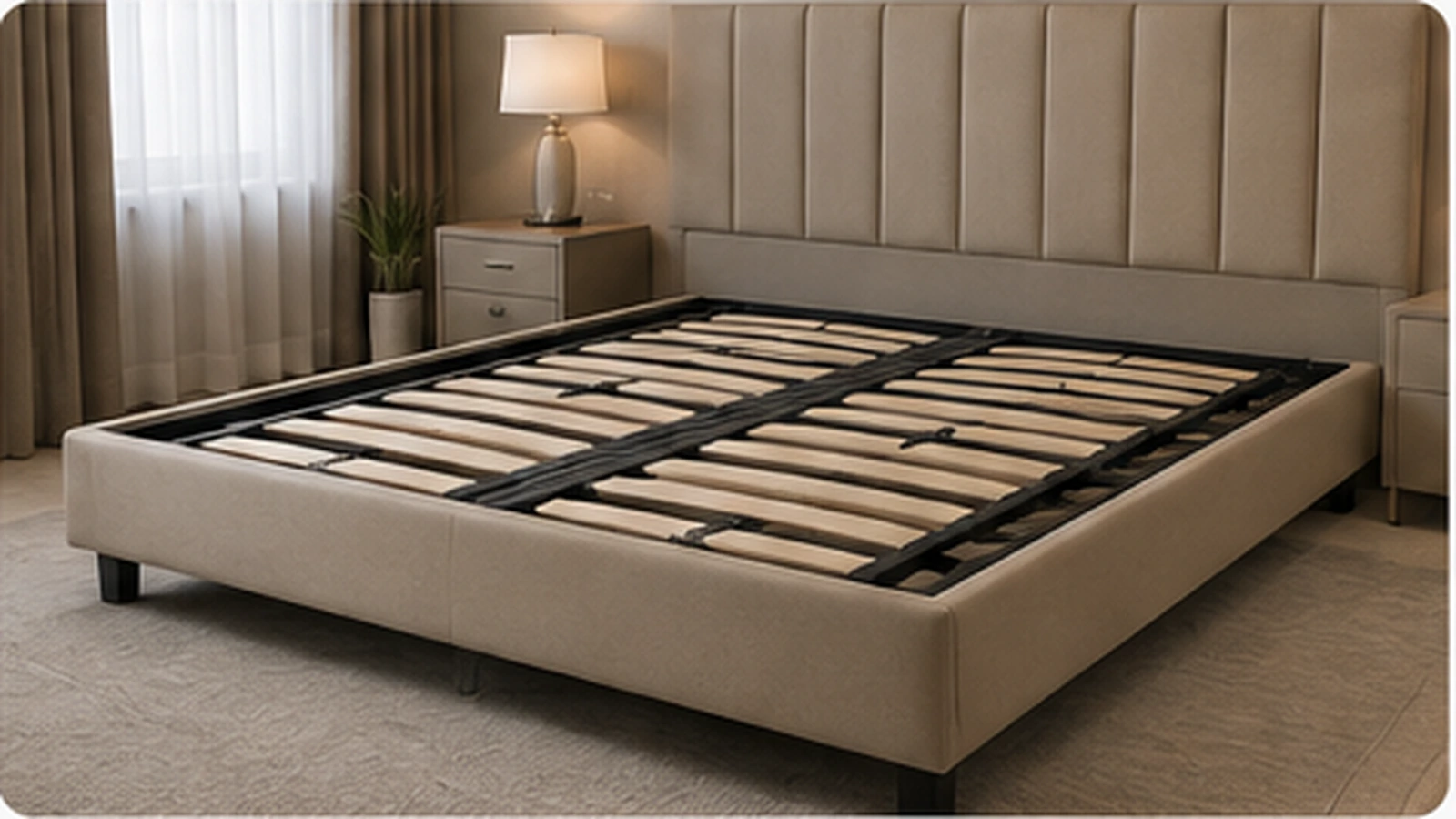
Upholstered Hotel Bed Bases
Upholstered bases are widely used in hospitality because they create a finished appearance and can be coordinated with room fabrics and interior concepts. When reviewing an upholstered base, consider:
- Frame construction and rigidity
- Support surface beneath the mattress
- Leg or castor configuration
- Fabric durability and cleanability
- Corner and edge finishing
- Ease of moving the bed for cleaning
- Compatibility with headboards and wall-mounted details
- Replacement availability for legs, glides or fabric components
Platform and Structured Bases
Platform-style bases can provide a more architectural appearance and may be appropriate where the room concept requires clean lines or a low-profile design. The structure should provide even mattress support and remain stable under repeated hospitality use.
Twin-to-Double Flexibility
Hotels that sell the same room as either twin or double accommodation should plan the base and mattress system accordingly. The important issue is not only whether two beds can be pushed together, but whether the combined arrangement remains stable, visually aligned and comfortable for the guest.
Review base height, mattress height, joining solutions, headboard width and the gap between sleeping surfaces as one coordinated specification.
Select the Mattress According to Comfort, Durability and Use
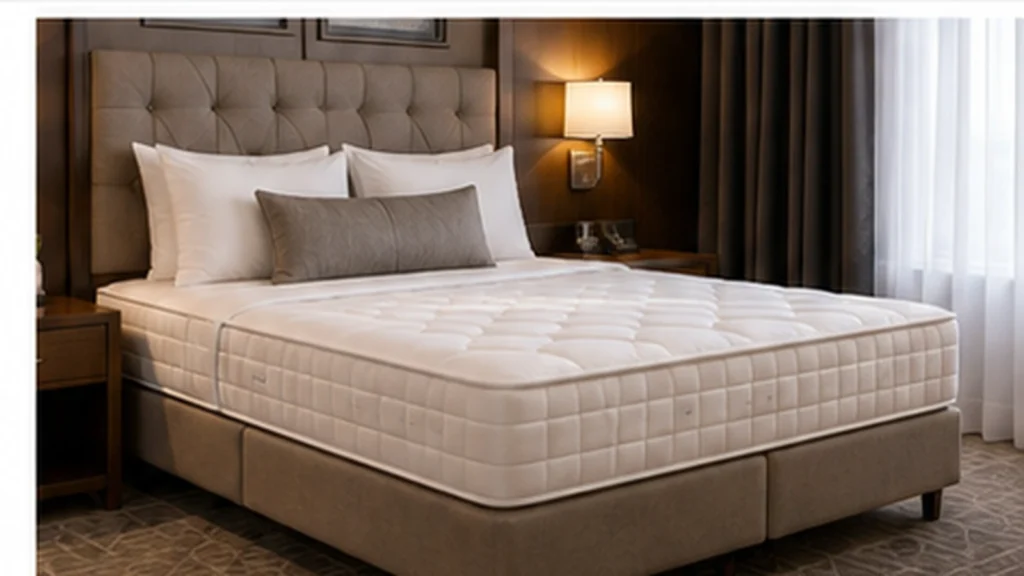
The mattress is the most direct contact point between the guest and the bed system. Its construction should balance pressure distribution, body support, temperature management, edge stability and long-term dimensional consistency.
Hospitality mattresses may use different combinations of spring systems, foam comfort layers, memory foam, gel-infused materials, quilted layers and other engineered components. The correct solution depends on the intended comfort level and the operational requirements of the property.
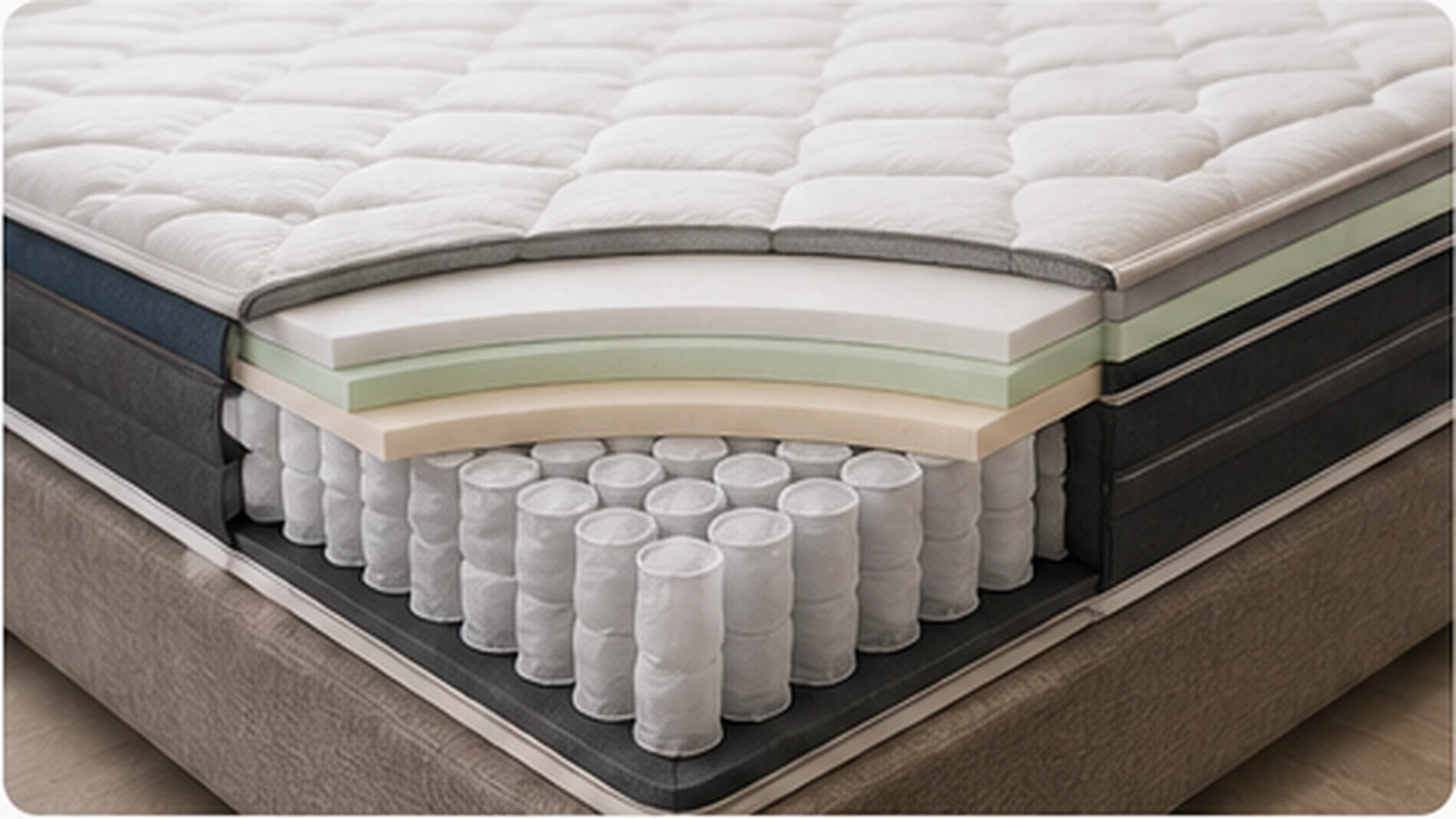
Pocket Spring Systems
Individually pocketed springs can provide localised support and reduce the transfer of movement across the mattress. For hotels, the overall spring specification should be considered together with comfort layers, border support and upholstery construction rather than judged by spring type alone.
Foam and Comfort Layers
Comfort layers influence the initial feel of the mattress. Depending on the specification, these layers may be designed to provide pressure relief, resilience, contouring or thermal comfort. Procurement teams should ask for a clear layer-by-layer construction rather than relying only on marketing terms such as “soft”, “orthopaedic” or “luxury”.
Edge Support
Hotel guests frequently sit on the edge of the bed while dressing, using a phone or preparing luggage. Edge stability therefore contributes to both comfort and perceived quality. A mattress that feels comfortable in the centre but collapses excessively at the perimeter may not perform well in hospitality use.
Firmness Selection
There is no universal firmness level that suits every hotel guest. A practical hotel specification generally aims for a balanced, broadly acceptable comfort profile rather than an extreme feel. The final decision should be based on physical samples whenever possible.
For significant projects, compare sample mattresses under realistic conditions and involve representatives from operations, housekeeping and project management in the evaluation.
Coordinate Mattress Height, Base Height and Finished Bed Height
Mattress thickness should never be specified in isolation. What matters to the room is the total finished height of the sleeping surface once the mattress, topper if used, protector and bed base are combined.
An excessively high bed can create accessibility and housekeeping problems, while a bed that is too low may conflict with the intended room design or guest expectations.
Before approval, confirm:
- Base height
- Mattress height
- Topper height if applicable
- Finished sleeping height
- Headboard proportions
- Bedside table relationship
- Clearance for housekeeping equipment
- Any accessibility requirements relevant to the project
Specify the Correct Bed and Mattress Dimensions
Hotel bed dimensions vary by market, property positioning and room plan. Avoid assuming that familiar size names such as single, double, queen or king always refer to the same measurements in every country.
For international projects, specify dimensions numerically in millimetres or centimetres and confirm the required tolerance. This prevents misunderstandings between architectural drawings, bedding specifications and manufacturing documents.
Dimension planning should also coordinate with:
- Room clearances and circulation
- Bedside tables
- Wall-mounted headboards
- Power and USB outlets
- Lighting positions
- Bed linen sizes
- Mattress protectors
- Valances or base skirts where used
Plan Hygiene, Protection and Housekeeping Efficiency
A hotel bed is handled by housekeeping teams far more frequently than a typical residential bed. Hygiene and maintenance therefore need to be included in the original specification.
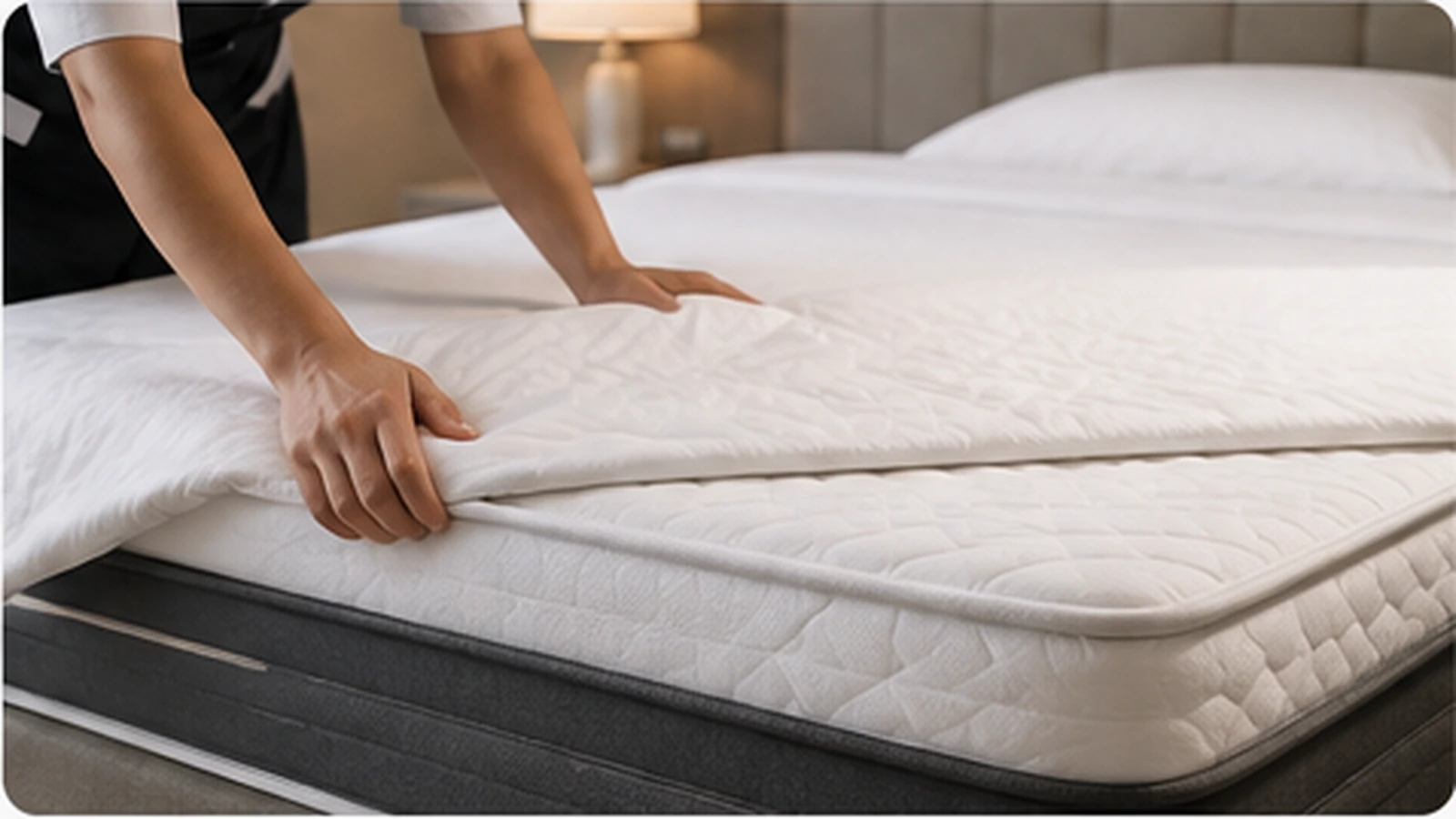
Consider using a coordinated protection system that may include mattress protectors, washable covers or replaceable comfort components depending on the mattress design and hotel operating standard.
Housekeeping teams should be able to:
- Change linen without excessive lifting difficulty
- Access the floor area around and beneath the bed
- Move the bed safely when required
- Inspect the mattress and base easily
- Replace protectors or removable components without specialist tools
- Identify damage before it affects the guest experience
Small details such as base weight, castor quality, leg position and mattress handling can have a significant effect when multiplied across hundreds of rooms and daily housekeeping cycles.
Review Fire, Safety and Destination-Specific Compliance Early
Hospitality projects may be subject to fire-performance, material, labelling or product-safety requirements that differ by country, hotel brand, operator and project type. These requirements should be identified before final product approval.
Do not assume that one certificate or test report is automatically suitable for every destination. The procurement team should confirm the documentation required by the project consultant, operator and local authorities and communicate those requirements to the manufacturer before production.
Where compliance documentation is required, the project specification should clearly state:
- Destination country
- Applicable project or brand standard
- Required test method or certification
- Products and components covered
- Required language and document format
- Whether samples or laboratory testing are required before mass production
Evaluate Durability as a System, Not a Single Material
Durability depends on the interaction between the frame, support system, mattress structure, upholstery, stitching, edge construction and hardware. A premium fabric does not compensate for a weak frame, just as a strong spring unit does not compensate for unsuitable comfort layers.
When comparing hotel beds, request a complete technical specification and review:
- Base frame construction
- Support surface
- Mattress layer structure
- Spring or support system
- Edge reinforcement
- Fabric and ticking specification
- Stitching and quilting
- Legs, glides or castors
- Replaceable components
- Cleaning and maintenance instructions
For large projects, sample approval is particularly valuable because it allows comfort, finish, dimensions and handling to be reviewed together.
Consider Guest Comfort and Hotel Positioning Together
The bed is one of the strongest physical contributors to a hotel guest’s perception of the room. Comfort should therefore align with the property’s positioning rather than being treated as a generic procurement item.
A luxury resort may prioritise deeper comfort layers and a more substantial visual profile, while an urban hotel may place greater emphasis on efficient room use, standardisation and ease of maintenance. Extended-stay properties may require a different balance again because guests occupy the bed for longer periods.
The objective is not to create the most complex mattress possible. It is to create a consistent sleep experience that matches the hotel concept and can be maintained across the complete room inventory.
Plan Replacement, Refurbishment and Future Expansion
Hotel beds should be specified with their future lifecycle in mind. During the initial procurement stage, ask how individual components can be replaced and whether matching products can be supplied later.
Useful questions include:
- Can damaged legs, castors or glides be replaced?
- Can base upholstery be renewed?
- Can mattress comfort layers or removable tops be replaced where the design allows?
- Can additional matching beds be ordered for future rooms?
- Can the same fabrics or equivalent finishes be sourced later?
- How should mattresses and bases be rotated, inspected or maintained?
A system that supports practical maintenance and phased replacement may provide better long-term value than a lower-cost product that must be replaced completely when one component is damaged.
Coordinate Packing, Delivery and Installation
For hotel openings and renovation projects, logistics can be as important as the product specification. A bed may be correctly manufactured but still create project delays if packaging dimensions, unloading, lift access or room distribution are not planned.
Before shipment, confirm:
- Final room-by-room quantities
- Bed and mattress dimensions
- Packaging dimensions
- Loading and unloading method
- Site delivery restrictions
- Goods-lift and corridor dimensions
- Floor and room distribution plan
- Labelling requirements
- Installation responsibility
- Required delivery sequence
For international projects, the commercial quotation should also clearly define the agreed delivery terms, packing scope and any documentation required for export or import procedures.
Compare Total Project Value, Not Only Unit Price
A hotel bed is a long-term operational asset. Comparing only the unit price can hide differences in durability, comfort, handling, maintenance and replacement cost.
A more useful procurement comparison considers:
- Complete bed-system specification
- Mattress construction and comfort profile
- Base construction and finish
- Expected operational durability
- Housekeeping efficiency
- Maintenance and replacement options
- Packaging and delivery scope
- Compliance documentation
- Customisation requirements
- Supplier support for future additions
The lowest initial price is not always the lowest project cost. A more durable and maintainable specification may reduce disruption and replacement expense over the life of the hotel.
Build a Clear Hotel Bed Specification
A detailed specification helps manufacturers prepare accurate quotations and reduces the risk of different suppliers pricing different scopes.
For each bed type, provide:
- Required quantity
- Bed base dimensions
- Mattress dimensions
- Required total bed height
- Mattress construction or target comfort profile
- Firmness requirement
- Base fabric or finish
- Leg, castor or glide requirement
- Twin-to-double joining requirement
- Headboard interface if applicable
- Protector or topper requirement
- Fire and compliance documentation required by the project
- Packaging and delivery requirements
Also provide general project information such as property type, country, number of rooms, room mix, target opening date, delivery schedule, drawings and relevant operator or brand standards.
Common Hotel Bed Procurement Mistakes
Choosing the Mattress Before Defining the Bed System
Mattress, base, finished height, room layout and bedding sizes should be coordinated together. Selecting one element first can create dimensional conflicts later.
Using Only Marketing Descriptions
Terms such as “premium”, “orthopaedic” or “luxury” are not technical specifications. Request a clear description of the mattress construction, support system, comfort layers and base structure.
Ignoring Housekeeping
A bed that is difficult to move, clean around or remake can increase staff effort every day. Housekeeping representatives should be involved in sample evaluation for significant projects.
Assuming Standard Size Names Are Universal
Always specify actual dimensions. “Queen” or “king” can mean different sizes in different markets and between hotel brands.
Leaving Compliance Requirements Until the End
Required tests and certificates can affect materials, construction, lead time and cost. Confirm destination-specific requirements before production.
Comparing Quotations with Different Scopes
One quotation may include protectors, joining systems, special fabrics or delivery packaging while another does not. Compare line-by-line scope before comparing totals.
Hotel Bed Project Checklist
Property Information
- Hotel type and positioning
- Country and project location
- Number of guestrooms and suites
- Room categories
- Target opening or renovation date
Bed Requirements
- Single, twin, double and king configurations
- Bed base dimensions
- Mattress dimensions
- Finished bed height
- Extra-bed requirements
- Twin-to-double requirements
- Headboard coordination
Comfort and Construction
- Target firmness
- Mattress construction
- Edge support
- Base construction
- Fabric or upholstery finish
- Protector or topper requirement
Project and Logistics
- Required certificates or test documentation
- Sample approval process
- Packing requirements
- Delivery destination
- Site access information
- Room-by-room distribution requirements
- Contact person and company details
Providing this information at the beginning of the process supports a more accurate technical review and a clearer project quotation request.
Frequently Asked Questions
What should hotels consider when choosing a bed?
Hotels should evaluate the bed as a complete system, including the base, mattress, finished height, comfort level, edge support, housekeeping requirements, durability, compliance documentation and long-term replacement strategy.
Is a thicker hotel mattress always better?
No. Mattress thickness should be coordinated with the base and required finished bed height. Construction quality, support, comfort layers and durability are more important than thickness alone.
What firmness is best for hotel mattresses?
There is no single firmness suitable for every guest. Most hotels aim for a balanced comfort profile that can serve a broad guest population. Physical sample testing is recommended for significant projects.
Should twin beds be able to convert into a double bed?
This depends on the room programme. Where flexible twin/double sales are required, the bases, mattresses, joining solution, headboard and bedding should all be planned for the combined configuration.
What information is needed for a hotel bed quotation?
Provide quantities, dimensions, room mix, mattress and base requirements, target comfort level, finishes, project location, delivery schedule, compliance requirements and any available drawings or brand standards.
Can hotel beds be customised for a project?
Depending on the product and project quantity, dimensions, upholstery, colours, base details, comfort construction and other features may be evaluated for custom production.
Plan the Complete Hotel Bed System
The most successful hotel bed projects coordinate guest comfort, room design, housekeeping, durability, compliance and logistics from the beginning.
A well-defined specification allows the hotel, designer, operator and manufacturer to evaluate the same requirements and reduces uncertainty during quotation, sample approval and production.
Explore OTELSAN’s hotel beds, mattresses and hospitality textile product groups, review the online catalogue, or prepare a project quote request for your hotel opening, renovation or procurement programme.
For project-specific support, share your room schedule, quantities, dimensions, comfort requirements and destination details with the OTELSAN export team.